

The Voice of Us
This week in AI & marketing


Many developments hit AI and marketing this week. Instead of saying the same thing again — that AI is becoming the most reliable recommendation engine sending pre-warmed customers to your brand, that chat platforms will own the largest segment of human attention and therefore the largest segment of ad spend, that we wouldn’t bet our Roth IRA on the existence of most applied-creative jobs a year from now — I want to highlight a personal story tied to the most overlooked AI development this week.
AI voice.
By now, we can agree that AI generates copy, visuals, video, audio, and design better than 80% of human versions. In some categories, better than 90%. In a few cases, using a human no longer makes sense. And it’s only getting better.
There are two places AI is not there yet.
One is long-form video. The bottleneck isn’t capability. It’s infrastructure. We don’t have a fully AI-generated Marvel movie because we’d need to dedicate a full data center to make one. Technically doable, financially insane. For now.
The other is long-form AI voice. Anything past 10 minutes, or anything that needs to carry actual emotion. For a five-minute product explainer or a cold business speech, AI voice is fine. The longer it talks, and the more emotion it has to carry, the more it sounds like a walkie-talkie pretending to be a person.
I know because I tried. I started a newsletter about Italian lifestyle (read it here), and one of the marketing angles is an audio version. The posts are closer to literature than travel writing — long, emotional, a 15-minute read. You slow down, you read. That’s the idea. Not a 10-things-to-do-in-Florence bullshit list that anyone can write. But a long feature on a hidden town. Some of these posts are read aloud by me. So, I did what anyone experienced with AI would do: signed up for ElevenLabs, top tier, cloned my voice using over an hour of recordings, and pasted it into a post.
It was hilariously bad. By that point I’d recorded one episode myself, so I had something to compare against. I have a weird accent — Eastern European, British English, harshest Texan — and I don’t care if I lose it. But the intonation, the rhythm, the emotion, the feel of the audio. It was a bot reading a script. Which is what happened, I know, it’s ElevenLabs, hello. I tried editing the script with intonation cues, and ended up spending more time tweaking than I would have spent just recording it with a microphone. I canceled.
And that defines our rules. Short, transactional, no emotion? Use the bot. It will cost less than a creative’s salary plus 100x less than a production company. But long-form, emotion-led content with a brand attached to it? Right now, it’s a reputation minefield. The longer the bot speaks, the more ways you can tell. Our voice is inherently human. How we read aloud is inherently imperfect: we make mistakes, mispronounce words, and miss cues in the script. It’s all part of it. It’s all why it is human. Losing these, you are either a super-professional voice actor (which you aren’t) or a bot.
Emotions are hard to fake. Even between humans.
Claude Design Comes for Figma and Canva
We called Claude Design incredible when it launched. Turns out incredible-but-unusable is a real product category, and that’s roughly where it sat. A PCWorld reviewer torched 80% of his weekly Pro allowance in 25 minutes making three versions of one webpage. Fun demo, terrible tool.
But this week’s update might change that. The new editor lets you drag, resize, and align elements directly on the canvas, so you’re not burning a full model turn every time you nudge a button two pixels left. You can export to Adobe, Canva, PowerPoint, and a pile of others. And it now shares usage limits with chat, Cowork, and Code instead of drinking from its own tiny pool.
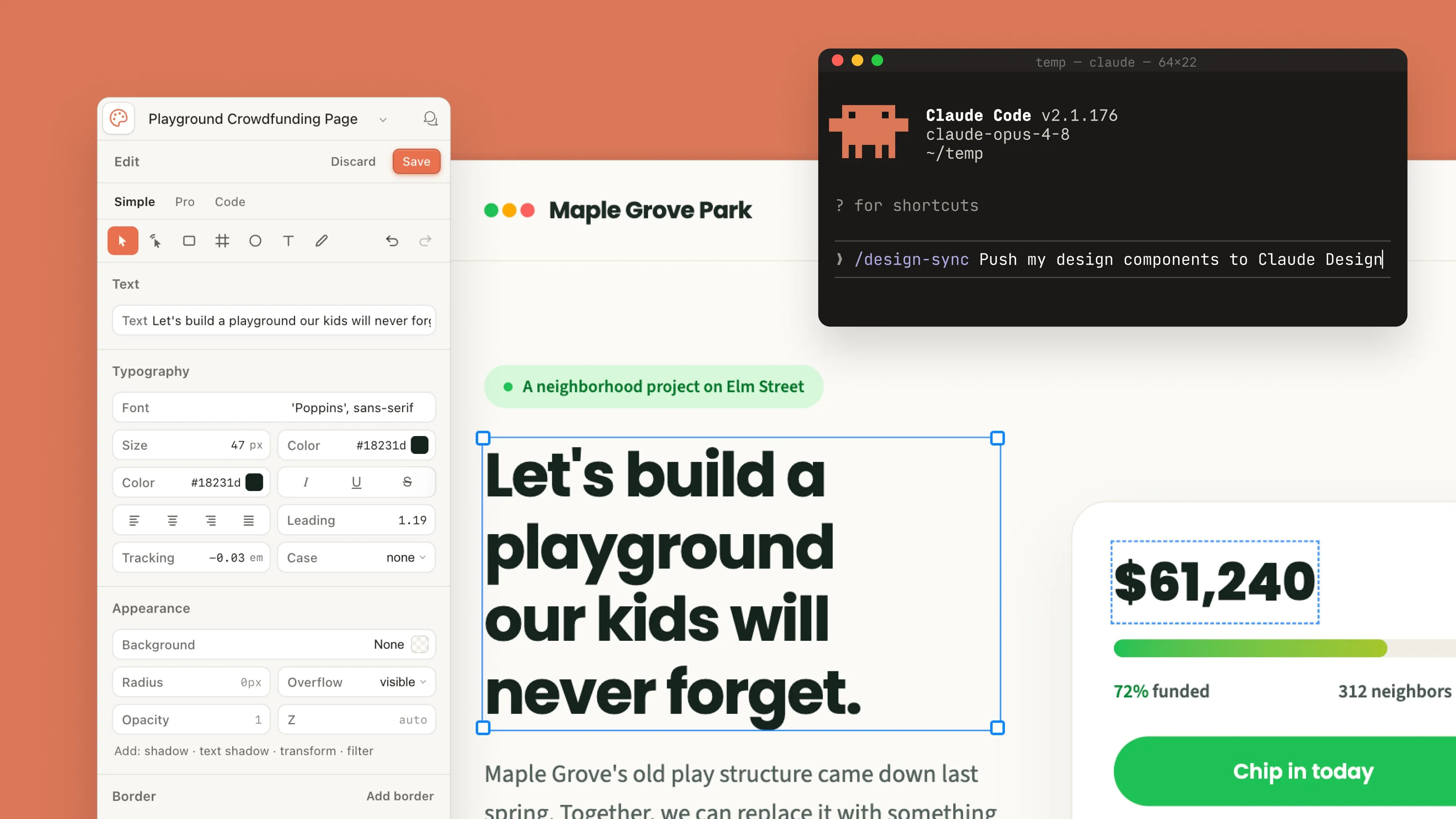
The real story is the Claude Code round-trip integration. You can pull your design system in from your existing website code, build against your actual components, and hand the finished layout to Claude Code, which picks up where you (ok, your dev team) left off.
The handoff between design and engineering has been a resentment factory for twenty years, and the bet here is that if one system does both sides, there’s nothing to misinterpret.
Whether it holds up on a real enterprise component library is the open question. But this is the first version that looks like a daily tool instead of a party trick.
AI Search Ads Are About to Become the Fastest-Growing Channel in Advertising
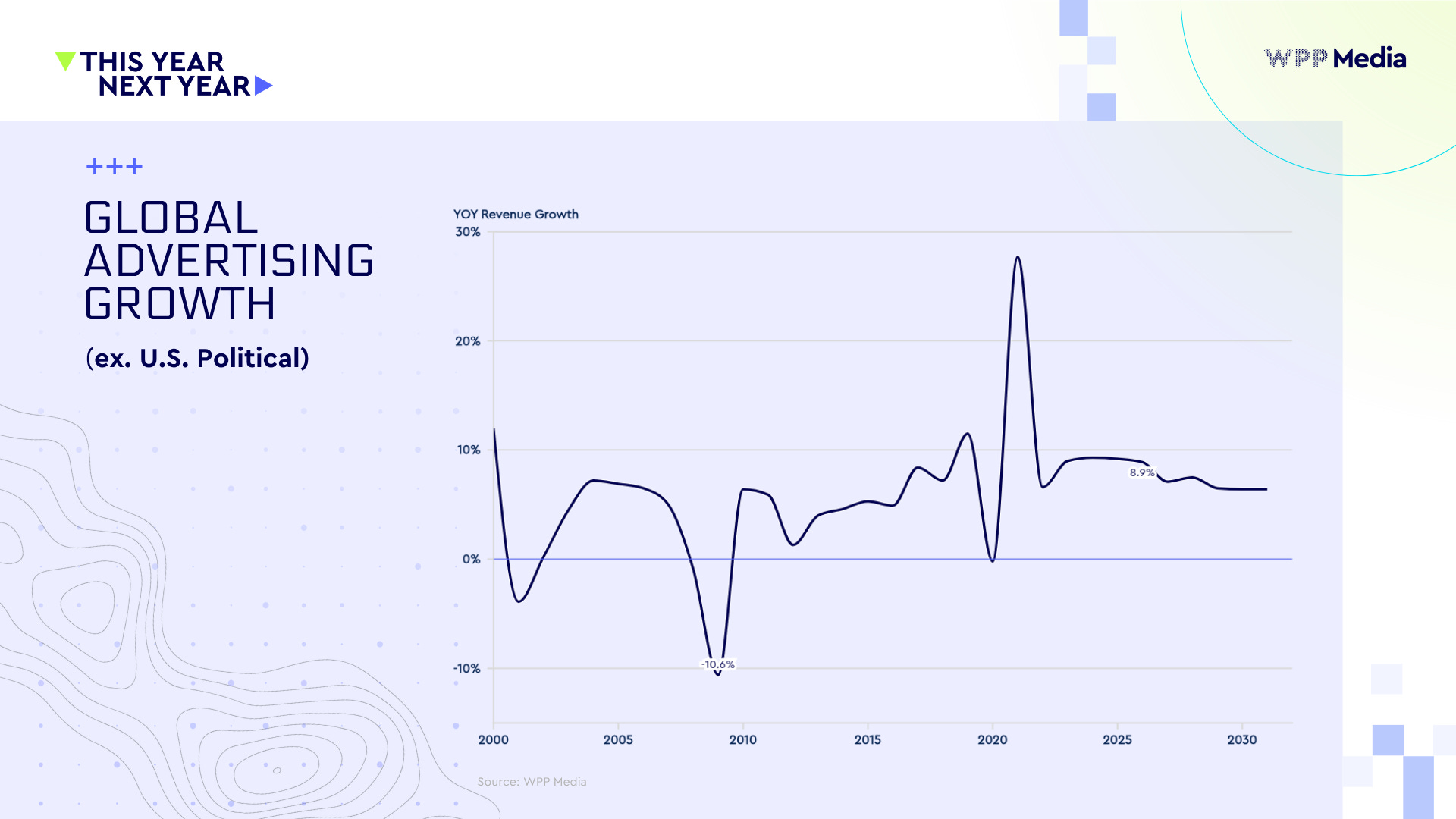
ChatGPT has been running ads for less than six months. WPP Media now thinks the category it’s creating gets to $100 billion faster than any media channel in history.
Quick recap on the math, because the headline number doesn’t actually come from WPP. OpenAI floated $100 billion by 2030; WPP’s own model is more conservative, putting the crossing point about six years out if current momentum holds. Either way, the speed is the point.
Traditional search took 22 years to reach that scale, social about 14, retail media around 10. Generative search in six would be a record by a wide margin.
This year it’s a rounding error: $5.1 billion globally, the US taking roughly 60% of it.
Where does the money come from? Partly from your existing search budget, partly from commerce, partly from the universal marketer urge to plant a flag on new real estate before a competitor does. The thing nobody can buy yet is control. There’s currently no way to buy ad space specifically next to AI Overviews, or to exclude the format.
So the forecast is real, the spending intent is real, and the actual product you’d spend it on is still half-built. Watch this one, but don’t let anyone tell you the playbook exists yet. It doesn’t.
AI Now Sends Twice as Much Traffic to Your Store — and It Converts Better
If you’ve been treating AI referral traffic as a novelty line in your analytics, it is becoming serious. Traffic from AI sources to US retail sites grew 138% year-over-year in May, and it’s up over 1,300% since Adobe started tracking in October 2024.
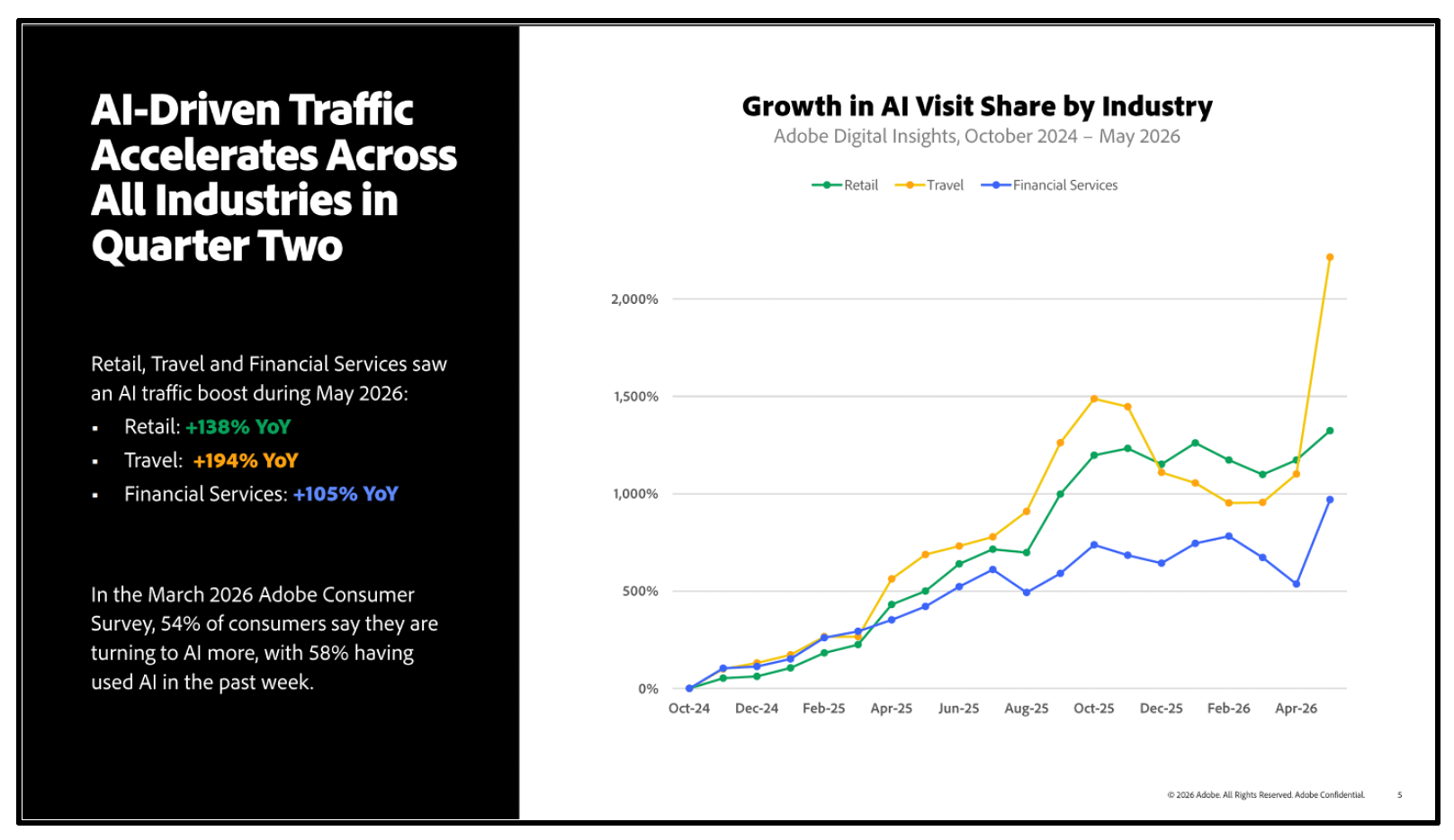
This isn’t garbage firehose traffic. AI-referred shoppers converted 54% better than non-AI sources — a complete reversal from a year ago, when AI traffic converted at roughly half the rate. They spend 53% longer on site, browse 23% more pages, and bounce far less. An AI visit is now worth 53% more than a non-AI one. Twelve months ago, non-AI visits were worth 128% more.
So what do you do? The boring, unglamorous thing: make your content machine-readable.
Adobe found cosmetics and electronics sites lead on AI readability; grocery and furniture lag because their page design suppresses AI citation. If your specs live in a PDF or your product story is buried under an animated, undoubtedly amazing-looking illustration, you’re invisible to the systems sending the best traffic you’ll get this year.
Fix that and you’ve helped your humans too.
The Biggest Change to Ad Targeting Since Targeting Existed
Digiday published a vector-based targeting explainer this week, and if you do any media buying, you should read the whole thing. The short version: keyword and audience-segment targeting are about to look like checkers next to chess.
Here’s the idea, stripped down. A vector is a set of coordinates — like latitude and longitude, except instead of two dimensions it can have thousands. Those dimensions let you place a piece of content, or a person, in space and measure how close it sits to everything else. Instead of picking keywords, you’d set a target vector and a radius — how far you’re willing to expand from that point. Keyword blocklists famously kill ads on “mobile phone” articles because the list contains “mob.” Vectors fix that by clustering on meaning, not letters: “mob” lands near other organization types and near crime, depending on the dimensions.
This is lookalike targeting’s smarter cousin. As data updates and embeddings recalculate, the coordinates move, so you can track trajectories and forecast someone’s propensity to buy.
The catch worth knowing — the vectors only relate to each other if they’re built with the same embedding model. Which means whoever owns the model owns the targeting layer. LiveRamp’s already donated a protocol to IAB Tech Lab to standardize this.
It’s early, it’s abstract, and it’s going to reshape how you aim a campaign. If you feel lost, read the explainer. You’ll be a year ahead of most people.
OpenAI’s “GPT-Bidi” Could Make Voice AI Actually Work
This one is to watch, not to act on — yet. OpenAI looks to be prepping a major voice upgrade built on a new architecture leaked as GPT-Bidi — short for bidirectional. Reporting suggests it can listen and speak at the same time, absorb interruptions, and change course mid-sentence instead of freezing the second you say “mm-hm.” If you’ve ever talked to a voice assistant and felt like you were trading walkie-talkie transmissions, that’s the problem it’s built to kill.


This is from leaks and product-code sightings, not an announcement. The name could change before launch, and the timing isn’t clear. So treat the specifics as soft.
But the direction isn’t soft at all. OpenAI’s text models sprinted ahead while voice stayed on an older stack, and closing that gap is the whole bet behind their audio-first hardware ambitions.
The moment this becomes available for outside developers, fully voice-driven customer service agents stop being a demo. And that might be by year’s end.
If your support org runs on phone queues and IVR trees, or if your sales team is on the phone 24/7, this is the technology that finally comes for them.
Share with a colleague. Earn paid membership months.