




The AI world is changing in an exciting way - it’s becoming more natural and human-friendly.
This week’s advances point to AI tools that work alongside us rather than just automating tasks. Whether it’s Google’s simple drag-and-drop image creation or ByteDance’s impressive video generation, we’re seeing AI adapt to how creative people actually work, instead of making them learn complex technical commands.
For businesses and creators, this opens up remarkable new possibilities to do more while staying true to your vision. Picture making custom videos in minutes, creating original music without worrying about licensing, or working with an AI assistant that truly gets your style and brand voice. The gap between having an idea and bringing it to life is getting smaller every day, letting teams spend more time on big-picture thinking and less on technical details.
What’s especially encouraging is how these tools are being built with creators in mind. From Fiverr letting artists train and profit from their own AI models to Adobe ensuring their generated content is safe for commercial use, we’re heading toward a future where AI enhances human creativity rather than competing with it. To paraphrase Steve Jobs,
after the computer, AI is becoming the “bicycle for the mind.”
Still, getting the most out of these tools means thoughtfully adapting your workflows - the best results come when you actively shape your creative and business processes to make AI a natural part of your team’s approach.
Today, an AI-equipped marketing team delivers better, quicker, and more efficient campaigns compared to departments who got stuck in the past — and remember, these tools will only get better over time.
🎨 Google Whisk: Remix Images with AI (No Prompts Needed)
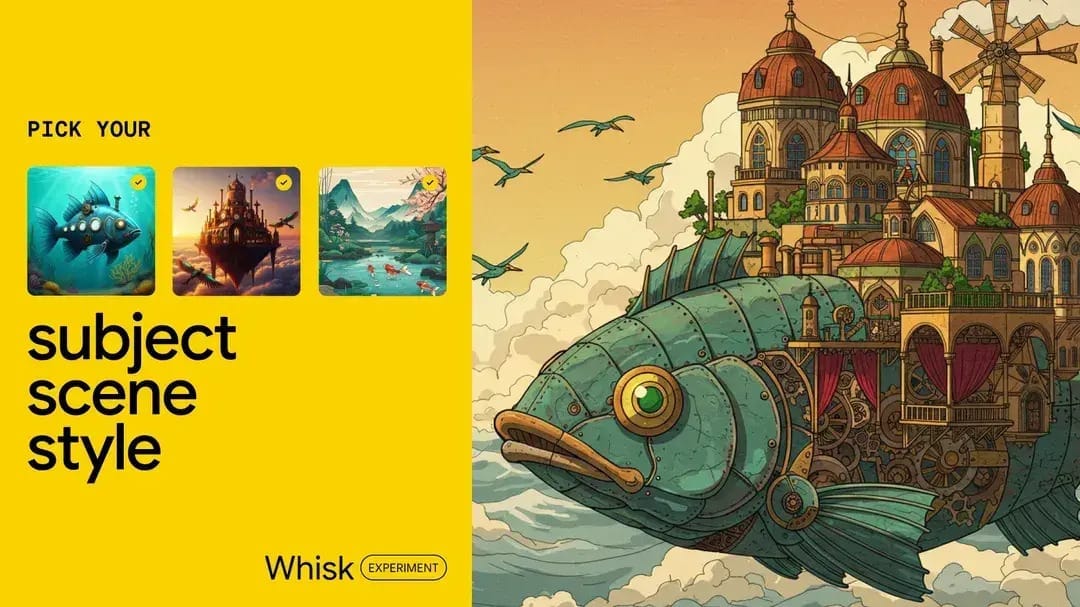
Visual brainstorming just got a new twist. Google’s new AI tool Whisk lets you mash up images to generate fresh visuals without writing a single prompt. Simply drag and drop images to define your subject, scene, and style, and Google’s Gemini model will auto-generate a detailed caption fed into its Imagen 3 image generator. The result is a unique image that captures the essence of your inputs rather than an exact copy, effectively remixing your ideas into novel visuals.
In other words, you can feed Whisk a product photo, a background scene, and an art style example—and watch it produce a brand-new composite image reflecting all three.
Why It Matters for Creative Marketers
Whisk offers a fast, fun way to prototype marketing visuals. Instead of laboring over detailed text prompts, content creators can leverage existing brand assets (logos, product shots, inspiration images) to generate new on-brand graphics. This lowers the skill barrier for using generative AI in design.
By capturing the feel of your images and not just copy-pasting them, Whisk helps ensure the output is original – potentially avoiding the repetition or copyright worries of pure image reuse. It’s a glimpse of more intuitive creative workflows, where you can literally show the AI what you envision and get fresh content back. For creative teams, that means speeding up brainstorms and iterating ad concepts without needing a graphic artist on hand for every new idea.
🎬 YouTube’s Veo 2: No B-roll? No Problem.
Stuck without the perfect video clip for a campaign or social post? YouTube’s latest update has you covered. Veo 2, Google DeepMind’s new video generation model, is now integrated into YouTube Shorts’ Dream Screen feature. It lets creators (and advertisers) generate video backgrounds or even entire short video clips from a simple text prompt. Need a quick scene of a beach sunset or a flashy product reveal? Just type it, and Veo 2 will create it on the fly, right within the YouTube app.

The model produces state-of-the-art, high-quality videos with improved realism – it understands physics and human movement far better than earlier generative video tools. You can even specify visual styles or cinematic effects to get the look you want. And it’s fast – Dream Screen now generates these AI videos faster than before, meaning you can respond to trends or ideas almost instantly.
Why You Should Care
For marketers and content creators, Veo 2 is like having a mini video studio at your fingertips. You can instantly produce a backdrop or cutaway clip to enhance a promo video or Story. This lowers the barrier for high-quality video content creation – especially for short-form platforms.
Imagine a social media manager quickly whipping up a relevant video clip to ride a viral trend, without wasting hours searching stock libraries. The realism upgrades (better human motion, physics, etc.) mean these AI-generated videos will look more natural and professional, which is crucial for maintaining audience trust. Plus, Google is tagging these AI creations with watermarks and labels, addressing transparency concerns.
Overall, Veo 2 could supercharge your video content pipeline: ads, explainer videos, or creative Shorts can be made faster and tailored more closely to your vision – even if you don’t have footage on hand.