

The AI Commerce Gap: Why China Is Lapping the West
The one thing you need to know in AI today | AI-Ready CMO


A few seemingly unrelated stories landed this week, and separately, they look like routine AI business news. Together, they tell a much more interesting story about where AI commerce is actually headed — and who’s winning.
First, the ad side. OpenAI announced Criteo as ChatGPT’s first official ad-tech partner, and reports surfaced about early-stage talks with The Trade Desk (whose stock promptly jumped 21% on the news).
Two months ago, we flagged ChatGPT advertising as something to watch. It was a closed beta with $200,000 minimums — effectively a walled garden for Fortune 500 budgets. That wall is coming down. Criteo brings familiar buying workflows. The Trade Desk would bring programmatic scale. OpenAI is projecting that ads could double its consumer ChatGPT revenue to $17 billion this year.
We’re not quite at the “act now” stage, but we’re weeks away from it, not months. If you’re in performance marketing, start having the internal conversation about budget allocation.
Now, the commerce side — and this is where it gets complicated.
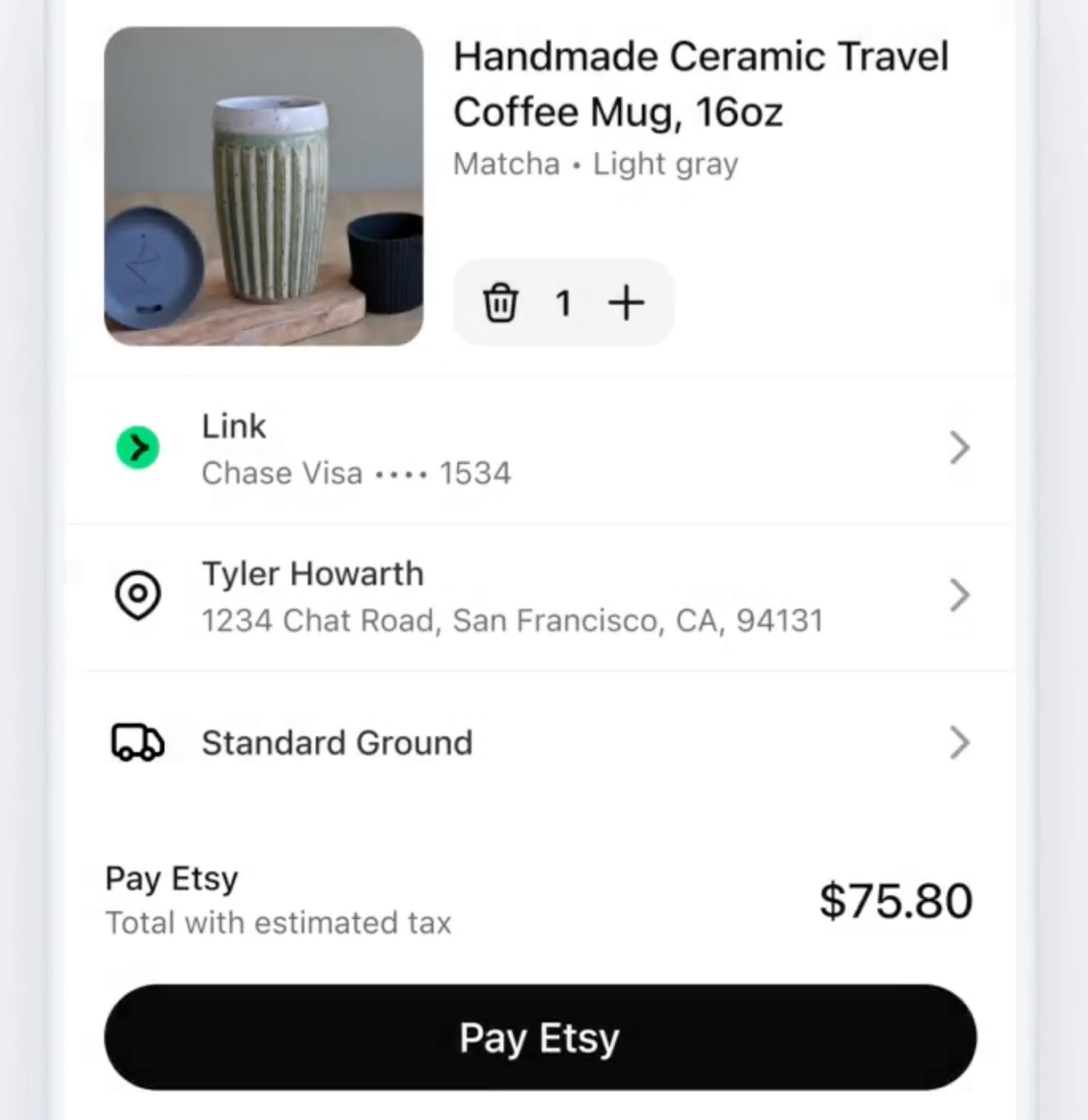
Almost simultaneously, OpenAI is reportedly scaling back its plans for direct checkout inside ChatGPT. This is the “Instant Checkout” feature that would have let users discover and buy products entirely within the chat.
Early data apparently showed that people were happy to use ChatGPT to research purchases, but weren’t actually completing them in the conversation.
So ChatGPT is repositioning as a discovery and recommendation layer that sends you to a retailer’s site to finish the job. Sounds familiar? It should — it’s basically Google Shopping with better conversation skills.
Now contrast this with what happened during Chinese New Year.
Alibaba’s AI app, Qwen, processed nearly 200 million orders — not searches, not recommendations, orders — for everything from milk tea (55 million orders alone) to flights and movie tickets. Over 4 million users aged 60 and above completed purchases in two or three chat messages, many for the first time ever shopping with AI. The difference isn’t just scale, it’s structural. Alibaba owns the AI model, the e-commerce marketplace, the payment rails through Alipay, the maps, the travel platform, and the ticketing system. When you ask Qwen to book a movie, it doesn’t redirect you to another site. It books the movie.

This is the gap between the Western and Chinese ecosystems.
OpenAI can’t replicate this because it doesn’t own the commerce infrastructure. It has to negotiate with Shopify, Stripe, retailers, and payment processors — all of whom have their own incentives and integration timelines. Even connecting Qwen to Alibaba’s own Taobao marketplace is a laborious, category-by-category effort that’s still far from complete. But the structural advantage is undeniable: when one company controls the entire stack, the friction between “I want this” and “it’s done” approaches zero. In the West, that friction is spread across dozens of companies that must agree on standards, data sharing, and revenue splits.
The Chinese model massively outperforms on speed and conversion.
The question is whether anyone in the Western ecosystem can build something comparably integrated. Amazon is the obvious candidate (they own the marketplace, the payments, the logistics, and they’re building Rufus), but they’ve been notably slow to go all-in. Until someone cracks this, Western AI commerce will remain a better search engine — impressive, but fundamentally incremental.
— Torsten and Peter

Share with a colleague. Earn paid membership months.
3 AI Marketing Tools To Try Today
Brevo
Brevo is an AI-assisted, all-in-one CRM and marketing platform that combines email, SMS, WhatsApp, live chat, and automation to draft and optimize campaigns. Use it for cost-friendly multichannel marketing without paying per-subscriber prices.
Rytr
Rytr is a lightweight AI copywriting assistant that handles blog drafts, emails, ad copy, and social posts on a freemium model. Use it to remove the blank page problem at an unbeatable price point for solo marketers and startups on tight budgets.
Firecrawl
Firecrawl is an AI-powered web scraping and crawling API that extracts clean, structured data from any website in LLM-ready format. Use it to build competitive intelligence feeds, content aggregation pipelines, or automated research workflows.
Paid members, your toolkit and this month’s report are below.