

The $1K+ Buying Decision Today
The one thing you need to know in AI today | AI-Ready CMO


Stefano Puntoni, a professor at Wharton, published a really good sum-up in HBR on how AI is changing marketing. TLDR: AI is changing marketing on two fronts. We use AI to search for (or more like, surface) information more than anything, and we also use AI to make purchasing decisions via agents.
This sounds nice. I’m not 100% sold on the agent thing yet, sure it is true for B2B, but probably not for B2C (yet). But absolutely yes, it will happen, no later than next year.
But then, this is exactly what I did in my own most recent buying decisions. Let me explain.
The two scenarios
Two big-ticket purchases: a car and an e-bike. Different prices, same mental weight — both above $1K, both paid in cash, both daily-use items for years. Not impulse buys. The kind of decisions you sit with.
No brand loyalty story. The previous car was a Jag, and I bought a Civic. The previous bike was a $100 no-name fixie, and I bought a Tenways e-bike. Specific needs, serious research. Two very different journeys.
Buyer persona for the marketers: 40+, married, no kids, no debt, comfortably middle-class, university-educated, based in Italy.
My decision journey before AI
The previous car was a Jag. Made by people who thought England still had the empire. Devoured a small oil field, visited the mechanic weekly, lived in a heated garage guarded by a wallet service and CCTV. I miss it dearly — but owning it was like Brexit. Deeply seductive as an idea. Hilariously catastrophic in practice.
The next one had to be the opposite. If the Jag was Prince Harry — demanding, spoiled, whining — I needed a civil servant. Unnamed, efficient, asks for nothing, outlasts every government. A Civic. Put 100K miles on it in under four years, which is remarkable given my commute has been zero miles for a decade. Visited the mechanic once a year, only because insurance required it.
It can even climb up to the Carrara mines (as pictured).
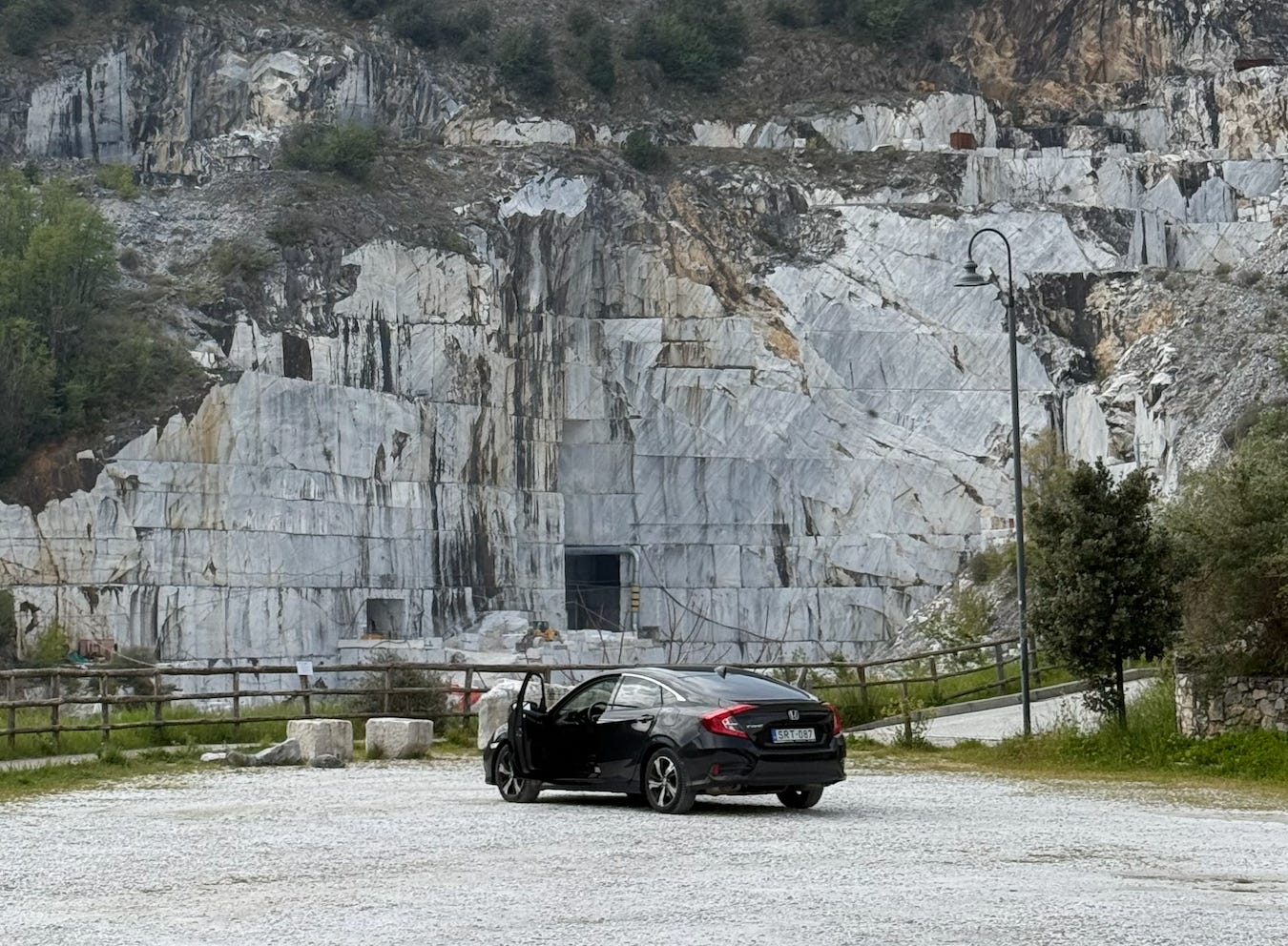
The buying process was old-school. I had basic requirements: zero maintenance, full guarantee, four seats, sporty sedan, no SUV, no diesel, no electric, automatic, under $50K, either Japanese-reliable or fixable with duct tape. I researched blogs, user reviews, press brochures, and YouTube car guys. Built a spreadsheet shortlist. Did dealership test drives. Scanned the used market. Ended up with a dealer deal — one-year-old car, 10% off, free window tint, first year insurance included.
All manual. Two months. Exhausting. I bought a sporty microwave that gets me from A to B, which was the goal, but I hated the process. There was no AI then. GPT had just come out.
My decision journey after AI
I was never a bike person. Bought a cheap fixie when we moved to Italy. Don’t wear cycling gear, don’t lock it, zero emotional attachment.
But we live on the Versilian coast — a 30km stretch of flat, uninterrupted sandy beach between Pisa and La Spezia, 50 metres from the sea, 40 metres from a paved bike path running the entire region. We ride weekly. And behind us are the Apuan Alps — mountainous, almost tourist-free, full of small villages we want to explore without a car.
So, an e-bike made sense. I have no cardio, and I just want to ride, not perform. The buying journey was a completely different story.
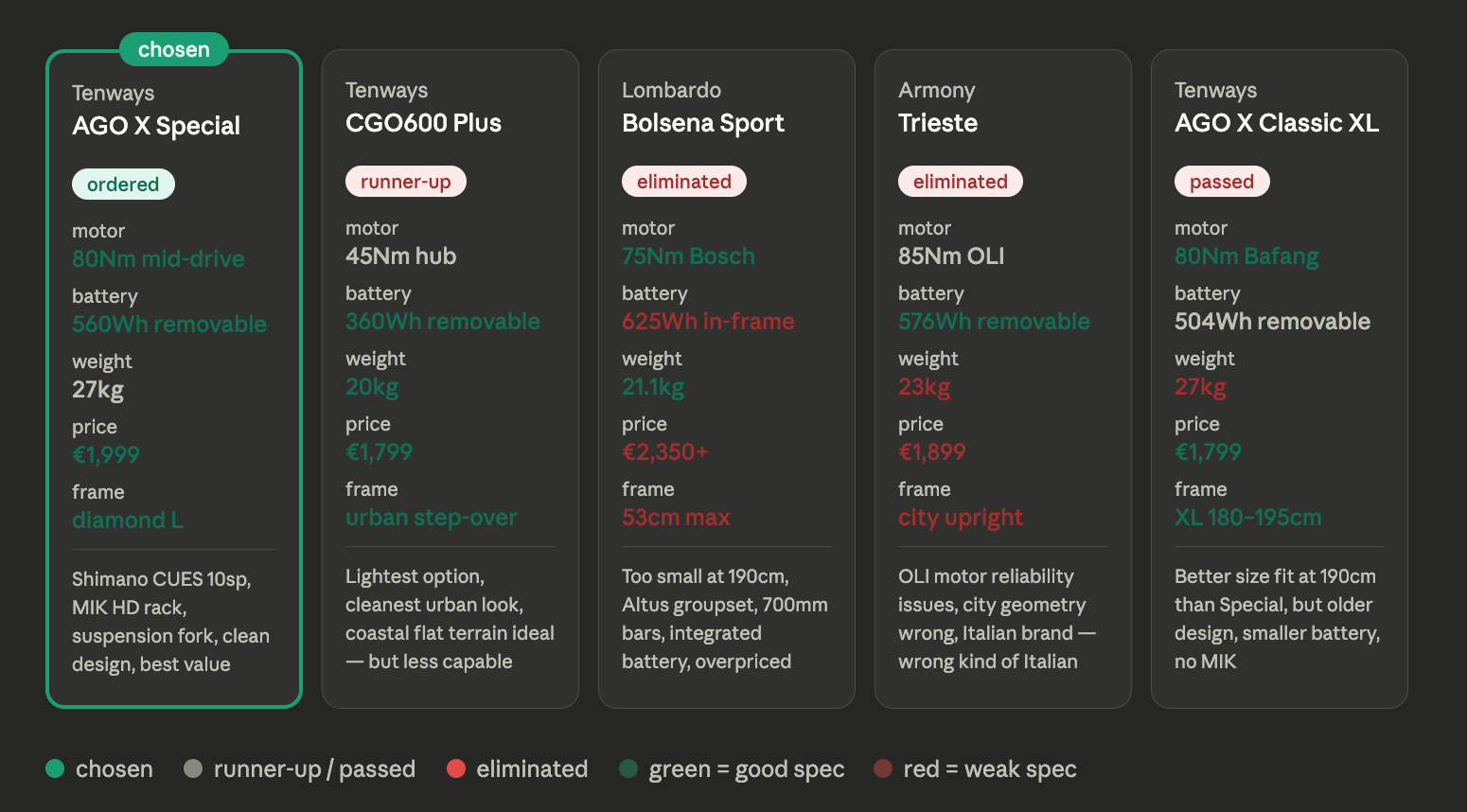
The buying journey took under a week. It started online — but the only website I actually opened was the checkout page. All the research was done by Claude. I did open YouTube, but only to see the product on camera, since the one I bought had no dealership nearby. I took one test drive at a local shop to confirm the motor type and torque would be enough — different brand, same specs.
Everything else? AI. The number-pulling, the review-reading, the comparison spreadsheets, the deal-hunting — all the parts that are necessary and completely miserable — gone.
If an AI agent had put in my card details, I’d have let it. By the time Instagram started serving me e-bike ads — out of nowhere, obviously, LOL — I was already getting texts from FedEx.
Contrary to what you might think, I am very sceptical about technology and trying to minimize my relationship with it. I was probably among the last people on the planet to buy a smartphone (an iPhone), and I still wholeheartedly hate it. I don’t own gadgets much, aside from my laptop (M Air), and my tablet (iPad). So it is not surprising that I always double-check AI outputs and, most of the time, treat AI as a stupid chatbot.
Despite all this, my very own buying decision journey changed completely in recent years. Especially compared to last year, to be honest. I made a similarly high-ticket purchase (an apartment rental) two years ago, but at that time, AI wasn’t “smart enough” to help me with it properly. I would use AI now, without a heartbeat.
If this is my journey, imagine the journey of someone younger, less sceptical, more connected, and less inclined to question what the AI tells them.
Does your marketing plan account for that?
— Torsten and Peter

Share with a colleague. Earn paid membership months.
3 AI Marketing Tools To Try Today
Inbox Hero
Inbox Hero is an AI-powered email deliverability and warmup tool that keeps cold outreach out of spam folders with sender reputation monitoring. Use it as essential infrastructure for any team doing serious outbound at scale.
Taplio
Taplio is an AI-powered LinkedIn growth tool that generates posts, schedules content, and surfaces engagement opportunities from a single dashboard. Use it as a B2B marketer or founder who treats LinkedIn as your primary demand generation channel.
Lemlist
Lemlist automates personalized cold outreach across email and LinkedIn with AI-powered customization that makes multichannel sequences feel genuinely personal. Use it to boost response rates on ABM campaigns with personalization that’s significantly better than templates.
Paid members, your toolkit and this month’s report are below.
