

OpenAI's Shopping Launch Is a Non-Event (For Now)
The one thing you need to know in AI today | AI Ready CMO

OpenAI just launched Shopping Research in ChatGPT, and your LinkedIn feed is probably already drowning in hot takes about how this changes everything about commerce.
It doesn’t. Not yet.
Here’s what Shopping Research actually does: you describe what you’re looking for, ChatGPT asks clarifying questions about budget and preferences, and after a few minutes of research, it generates a personalized buyer’s guide. You can mark items as “not interested” or “more like this” to refine results, and eventually get product recommendations with links to retailers.

Sounds impressive. In practice, it has some problems.
First, there’s an Amazon-sized hole in this story. Amazon has blocked OpenAI’s crawlers via robots.txt, which means the world’s largest retailer is essentially invisible to Shopping Research. You can ask for laptop recommendations, and ChatGPT will surface options from Best Buy, Walmart, and brand sites, but will politely suggest you “check if they’re available on Amazon” manually. When the dominant player actively walls you off, that tells you everything about who has leverage in this supposed revolution.

Second, the accuracy numbers sound better than they are. OpenAI is transparent about this: Shopping Research achieves 64% product accuracy, up from 37% for standard ChatGPT Search. That’s a significant improvement. It also means the AI is wrong about product details—price, availability, specs—more than one time out of three. Would you hire a salesperson who gets the basics wrong 36% of the time? OpenAI’s own disclaimer acknowledges this: “we encourage you to visit the merchant site for the most accurate details.”
Third, you still can’t actually buy things. Despite the hype, this is a discovery tool, not a transaction tool. OpenAI has an Instant Checkout feature with select merchants, but Shopping Research doesn’t integrate with it yet. You’re still clicking through to complete the purchase elsewhere, which means this is fundamentally just a better-formatted search result with conversational polish. Perplexity with better marketing.
And fourth—the real issue for marketers—you have zero visibility into any of this. You don’t know if your products were considered. You can’t optimize for it. You can’t measure it. You can’t bid on placement. It’s a black box that may or may not surface your brand, and you won’t know until a customer tells you they found you there.
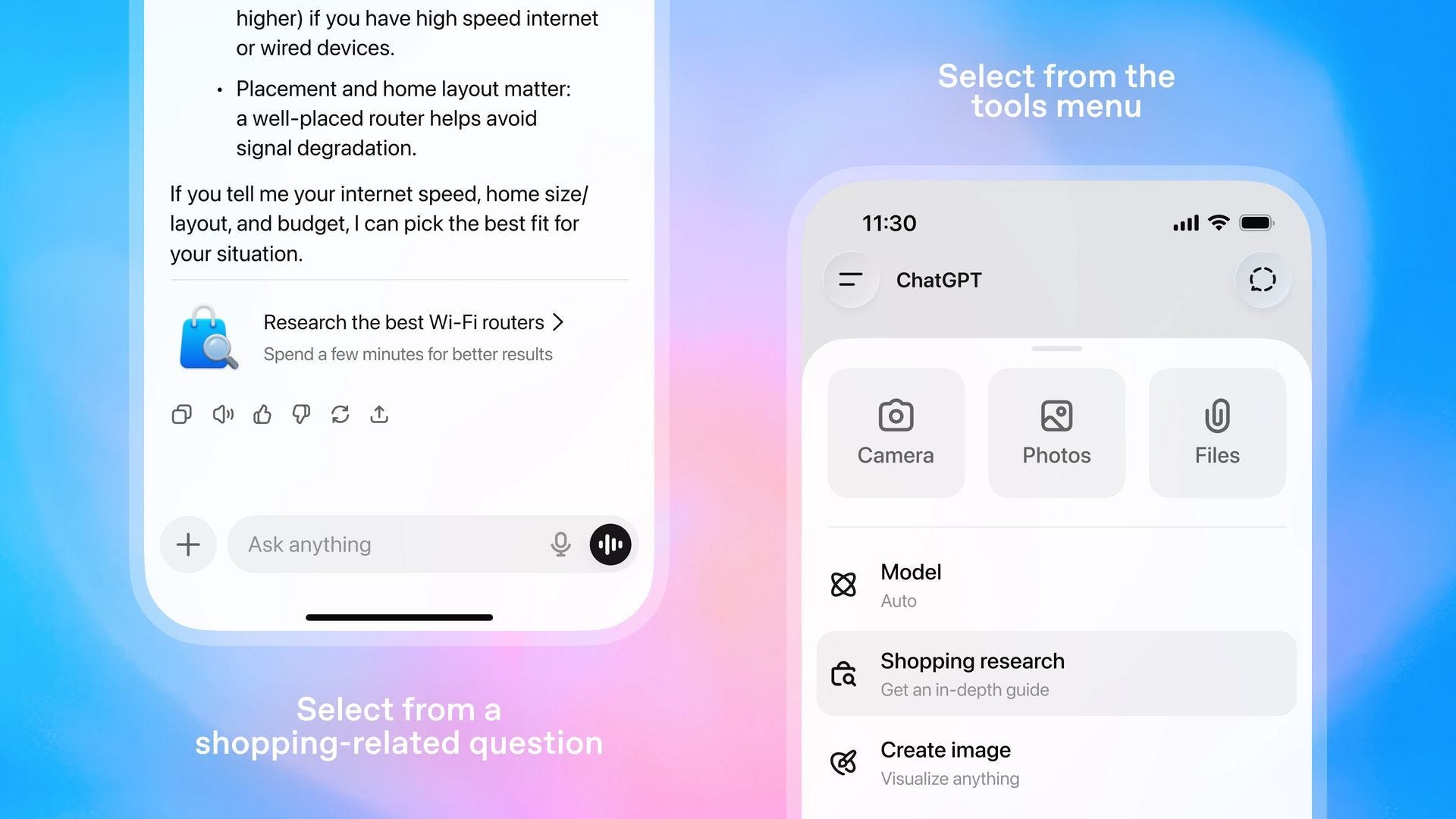
So why does this matter at all?
Because the direction is obvious, even if the execution isn’t there yet. OpenAI didn’t build this because shopping is solved—they built it because they need consumer traction before their next funding round. The “nearly unlimited usage through the holidays” line is the tell. They need behavioral data and usage patterns more than they need revenue.
But directionally, this is where things are going. Natural language product discovery isn’t new—what’s new is that Shopping Research achieves its 64% accuracy specifically because it uses your conversation history and memory. If ChatGPT knows you’re into gaming from past chats, it factors that into laptop recommendations. If you’ve mentioned budget constraints before, it remembers. This memory-driven personalization is how they jumped from 37% to 64% accuracy, and it’s powered by a GPT-5 mini variant specifically trained for shopping tasks.
That memory layer is also what makes this more than just a better search engine. Traditional product discovery is stateless—every query starts from zero. This is stateful. It learns. And yes, that raises uncomfortable questions about data monetization, especially given that 20% of OpenAI’s workforce reportedly comes from Meta.
But regardless of how they eventually monetize this, the pattern is clear: AI shopping agents will know your preferences better than you articulate them yourself.
Amazon will eventually need to pick a side. Accuracy will improve. Transaction completion will integrate. And when that happens, the gap between “I’m interested” and “I just bought it” will shrink from hours to seconds.
So, don’t panic, but don’t ignore this either.
Make sure your product data is clean and semantically rich. If your specs are buried in PDFs or locked behind poor information architecture, you don’t exist to these systems. Look into OpenAI’s merchant allowlisting process if you haven’t already. Make your use cases, problem statements, and product narratives clear—these AI models don’t think in SKUs; they think in stories.
By the time Shopping Research (or something like it) actually matters, you’ll already be ready. And if it never matters? You’ll have better product data anyway, which helps everywhere else.
For now, this is a feature to watch, not a fire to fight.

3 AI Marketing Tools To Try Today
Fireflies
Never take meeting notes again—Fireflies records, transcribes, and summarizes every call automatically, then syncs action items directly to your project management tools.
HeyGen
Create professional video content at scale with AI avatars—HeyGen lets you produce personalized videos without cameras, crews, or studios.
Simplified
Design, write, and schedule content from one platform—Simplified combines AI copywriting, graphic design, and social media management so you stop juggling multiple tools.