

OpenAI Built Its Own Claude Cowork, and It's Always Online
The one thing you need to know in AI today | AI-Ready CMO


Chances are you don’t have access to the just-announced ChatGPT Workspace Agents yet, unless your company is paying for OpenAI’s enterprise tier.
That doesn’t mean you should ignore it.
At my company, we’ve been living inside Claude Cowork for months now. I can tell you from experience that this always-on, shared-agent thing isn’t theoretical. I feel like I’ve hired five people who never sleep and live inside my chat window. It’s truly changing how I work and manage.
OpenAI’s version is architected differently enough that it’s worth understanding it, even if you can’t click the button yet.
Workspace Agents are essentially Codex (OpenAI’s coding agent) repackaged as a cloud service. It runs in the background. It maintains memory across sessions, connects to your Google Drive and Slack, and handles multi-step workflows without waiting for someone to open the app.
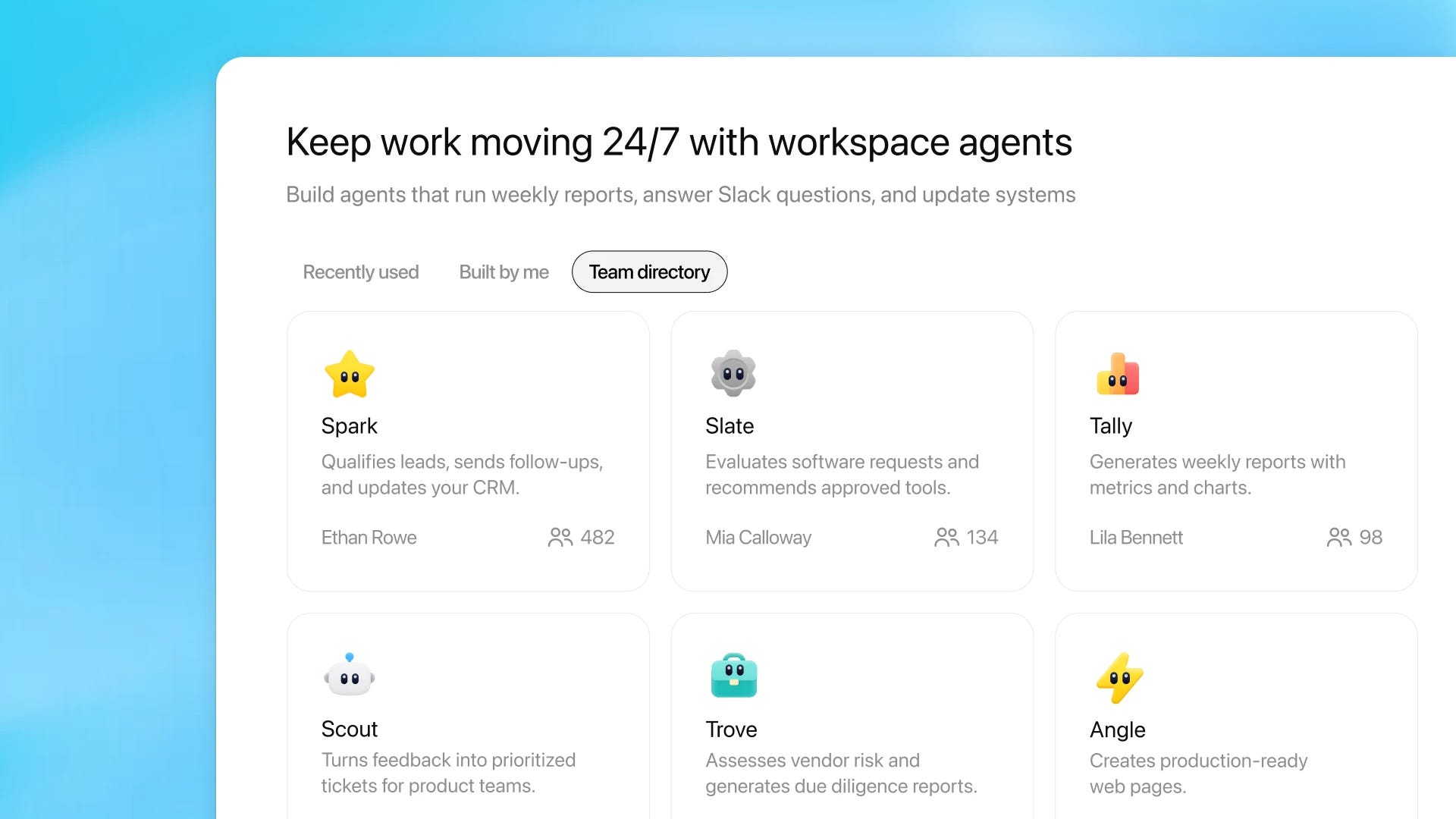
That’s the meaningful difference from Claude Cowork, which only works when the desktop app is running. OpenAI’s version is always online. You can schedule it to pull weekly metrics every Friday, route customer feedback from support into tickets for product, or research leads while you’re asleep.
But forget the tech specs for a second. The strategy is what matters.
For months, OpenAI looked like a company chasing shiny objects. Sora, a video-first social media platform. A separate ChatGPT for horny adults (for real). They were flailing. Then they killed both projects, tightened focus, and turned Codex into this.
And OpenAI has a wildcard Anthropic does not.