

Is hating on AI a viable marketing strategy?
The one thing you need to know in AI today | AI Ready CMO


Equinox rang in 2026 with a manifesto: “Your aliveness is an act of rebellion in an artificial world.” The luxury gym chain teased AI-generated absurdities—water-skiing babies, Bigfoot dancing in night vision—then pivoted to stark portraits of real, sweating humans. The tagline: “Question Everything But Yourself.”
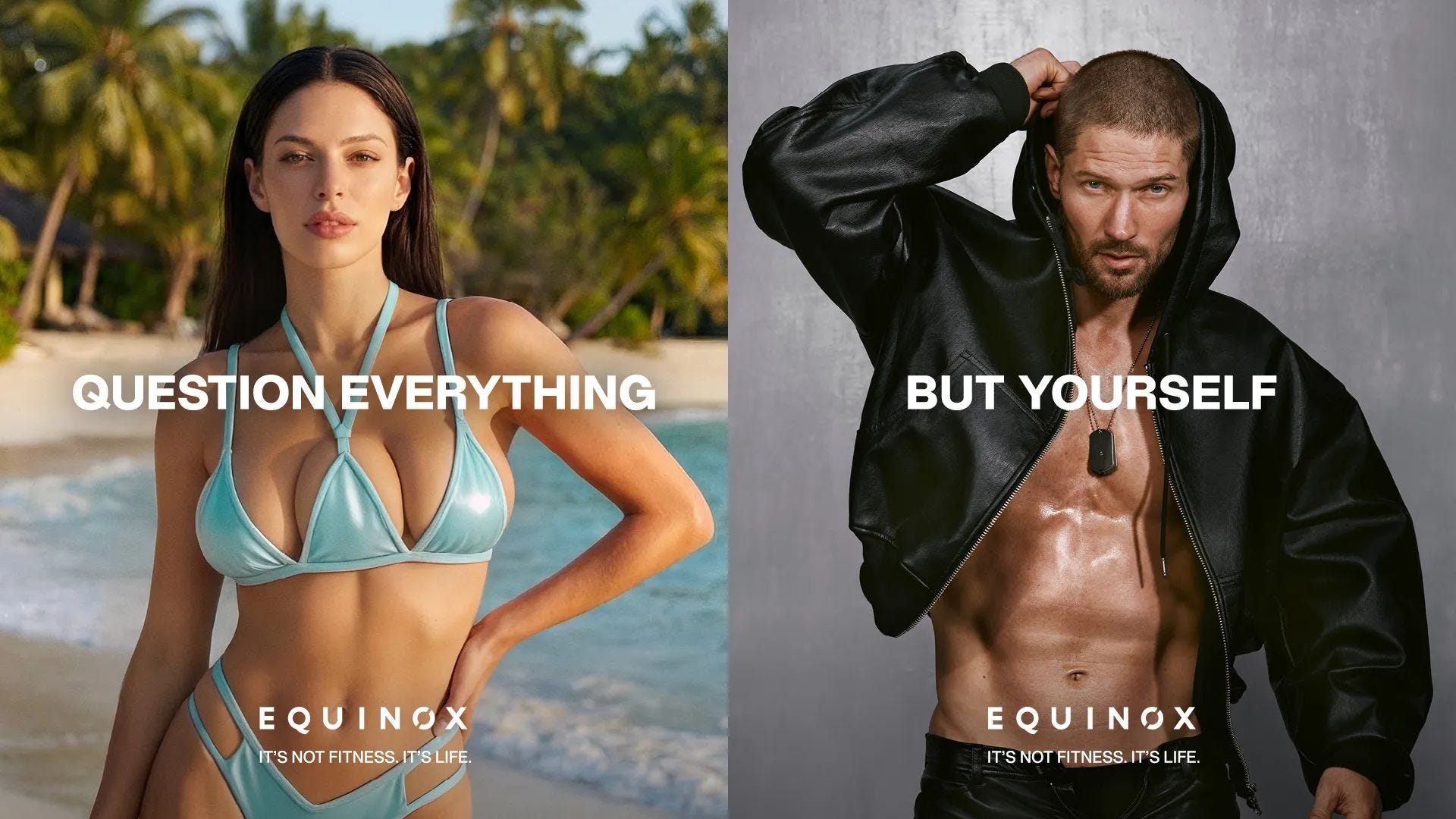
Something is clearly wrong with the model on the left
They’re not alone.
Almond Breeze enlisted the Jonas Brothers to mock AI-generated pitches. Aerie pledged “real people only” in its ads—their most-liked Instagram post of the year. Heineken ran billboards countering AI companionship wearables. Polaroid plastered Manhattan bus stops with “AI can’t generate sand between your toes.” And McDonald’s Netherlands had to pull an AI-generated Christmas ad after the internet called it “the most god-awful ad I’ve seen this year.”
Is hating on AI now a viable marketing strategy?
In a sense, these brands are exploiting a temporary window. AI-generated content is still clunky enough to mock—extra fingers, uncanny faces, that vaguely soulless sheen. (Although AI is nowhere near as bad as these ads want you to think.) But, that window is closing fast. The argument that “AI is low quality” has a shelf life measured in months.

What’s more durable connects to something Instagram’s Adam Mosseri wrote in his year-end memo: “Authenticity is becoming infinitely reproducible.” When AI can fake the polished look, we trust the raw. Soon it’ll fake raw too. Then what? We stop trusting what we see and start trusting who made it. Brands positioning around human craft aren’t dunking on bad AI output—they’re building something harder to fake: a documented creative process, real people with track records, sustained human presence that can’t be prompted into existence.
This could become genuine differentiation. “We work with humans” as a positioning statement, much like “Made in Italy” or “Family-owned since 1912.”
Not because humans are always better, but because for certain brands—emotional ones, luxury ones, ones built on trust—showing your work becomes part of the product itself. A detergent ad doesn’t need that. A fitness brand selling aliveness? Not sure.
And to be fair, even the loudest anti-AI campaigns can’t escape AI entirely. Equinox uses AI-powered massage beds in its clubs. Every one of these brands likely uses AI somewhere in their supply chain, their analytics, their operations. The positioning will always be somewhat performative—a choice about what to highlight, not a rejection of the technology.
So should you use AI in your creatives? Maybe. But monitor your feedback closely. Not because five angry Instagram comments should send you scrambling—a tiny but loud minority will always show up—but because we genuinely don’t know yet where the line is. How much AI is too much? Which creative choices trigger backlash, and which go unnoticed? There are no established rules here.
We’re figuring this out in real time.
3 AI Marketing Tools To Try Today
Frase
Research and write SEO content that ranks faster—Frase analyzes competitors, generates outlines, and optimizes for search visibility.
n8n
Unlock seamless workflow automation for your marketing team—n8n connects all your tools and streamlines processes effortlessly.
SurferSEO
Optimize content for search without guesswork—Surfer SEO analyzes top-ranking pages and gives you exact guidelines to outrank competitors.