



In the last year, AI models have conquered writing, coding, spoken audio, and even music. Photography and image generation, however, proved to be much more difficult.
Yes, the progress was visible: if you remember, the first models generated distorted faces, hands with missing fingers, and shots with impossible physics. Things got better but it was all very gradual, without a “holy crap” breakthrough moment.
Until now.
The new ChatGPT-4o update is not simply better — it is jaw-droppingly superior. Overnight, we went from “this is a fun experiment” to “we will never purchase another stock photo again” or even “we will not do a photoshoot ever again”. From “how many more Canva licences do we need” to “do we need this many Canva licences for real, though.”
And ChatGPT is not even the only game in town. Reve dropped a model that could have been the bombshell of the week if OpenAI had not ruined their moment. Even more exciting, MidJourney is launching its new model later this week.
Add to this the news about H&M replacing (ok, “augmenting”, but come on, we all know the end game here) their fashion models with AI twins. These are unprecedented times for the creative industry as a whole. It is a privilege to be your guide.
ChatGPT’s new image-generation features: from last to first in one update
Image generation was not, traditionally, one of OpenAI’s fortes. The underlying model, Dall-E, just wasn’t great or even just good. With the latest multimodal update of 4o, however, ChatGPT catapulted from last to first.
Unless you’ve been on a retreat with no internet this past week, you have surely seen Studio Ghibli-style images flooding everything. Memes, family photos, historical images, nothing got spared:
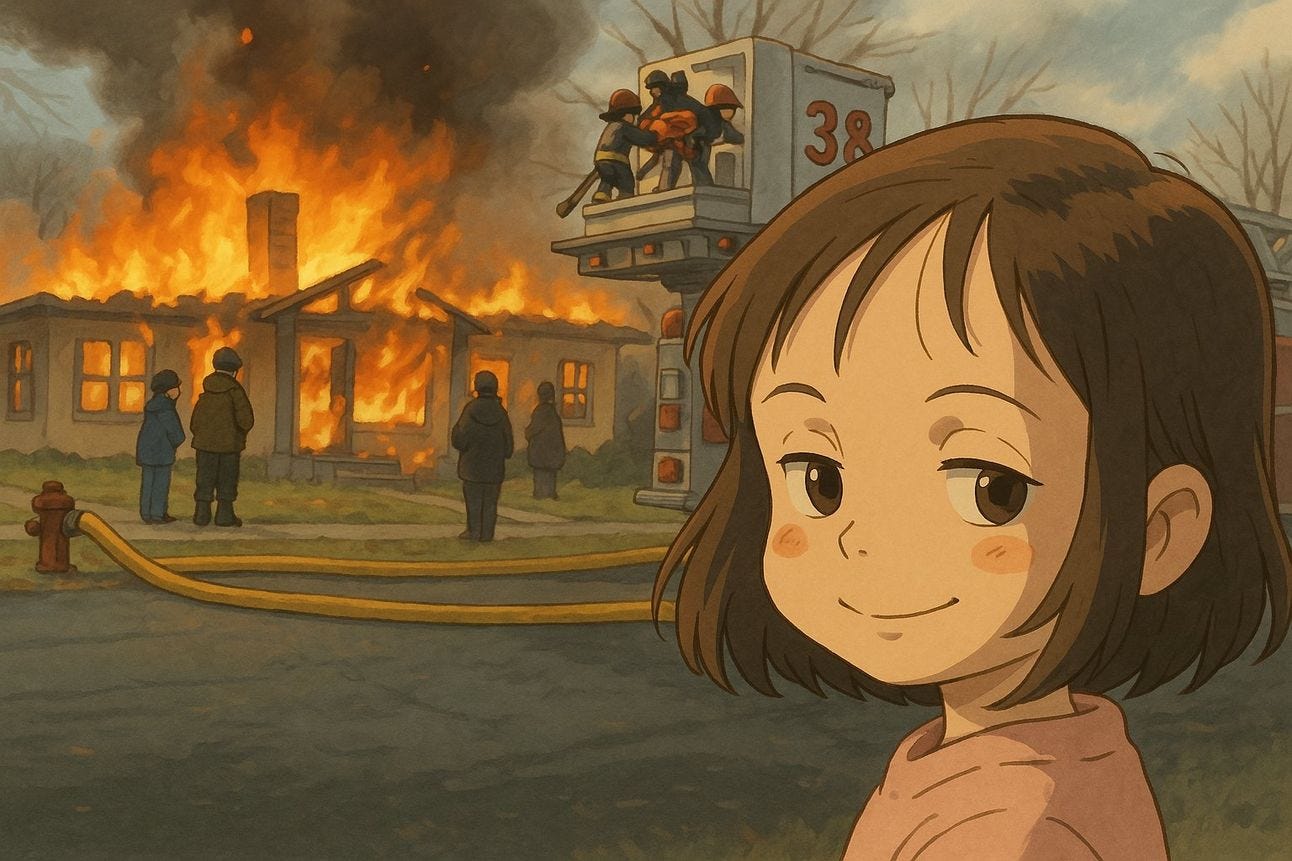
And it’s not just cartoons. The new model is just incredible: it handles text in images much better than before, and complex prompts with many elements reliably come out with correct details. For example, it can correctly bind attributes for 15–20 distinct objects in one scene without mixing them up, a big improvement in accuracy over previous image generators.
The end of stock photography
This level of prompt adherence makes stock photography all but obsolete (especially when used online — print is a different beast because of resolution requirements). You will never need to search for another photo, ever. You just generate the one you want.
Let’s see an example prompt:
Generate a photorealistic image of a thin but muscular black male in her late 20s training with dumbbells in a gym. He is doing biceps curls with 40 pound dumbbells. He is wearing blue short pants and a white Nike t-shirt. The lighting is heroic, with darker corners and a spotlight on the man, but the gym setting is visible with machines and free weights on the sides. He is struggling with the training set but determined, ready to conquer the weight. He is exhausted, sweating, but winning. The image should convey heroism. This is a professional ad photo, but it's very realistic.And the result:
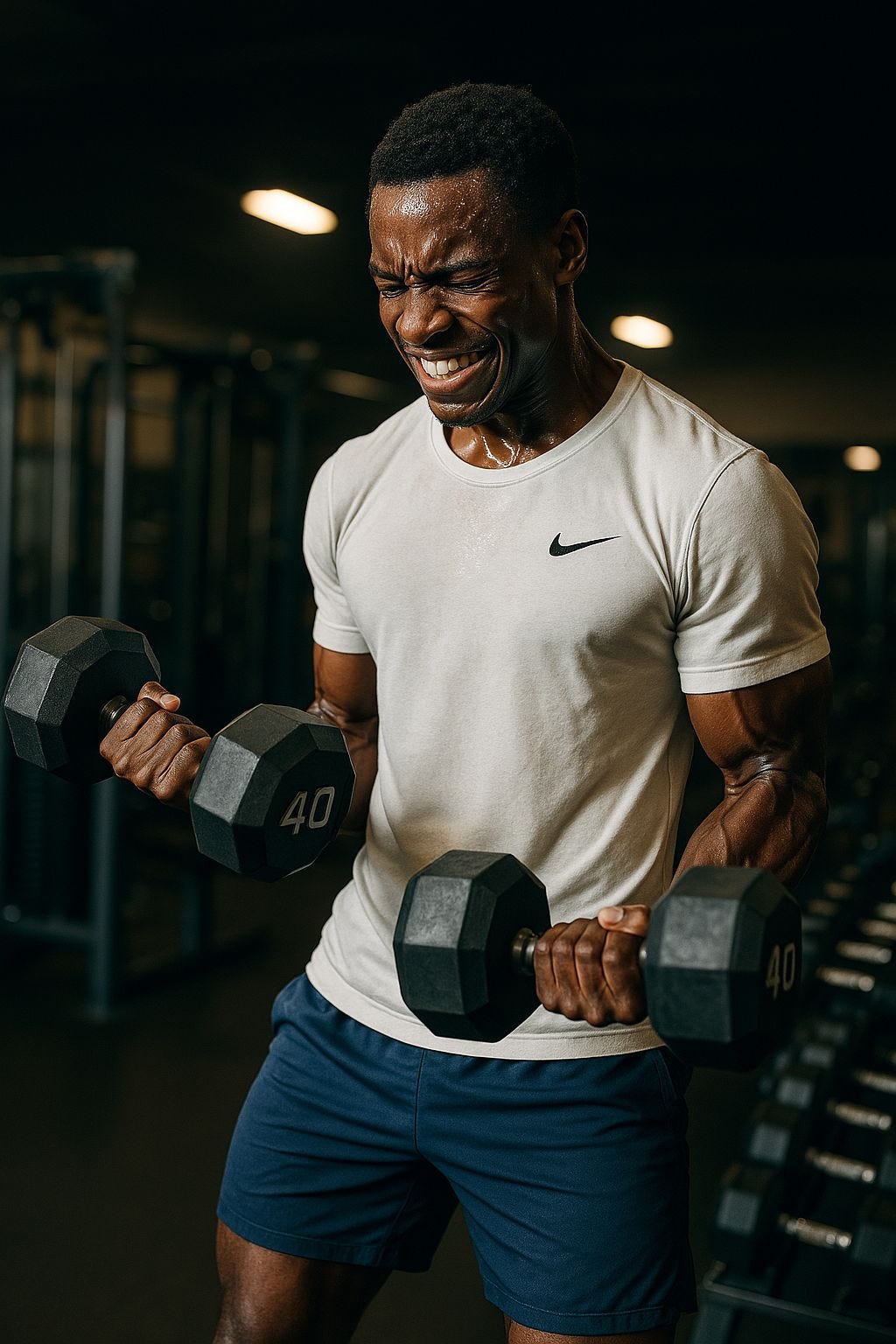
This image is, basically, perfect. The logo placement, the anatomy, and even the 40-pound markings on the dumbbells. But we can make it even better:
Great now can you please put this logo attached on the top left corner? But it is in black, you need to convert it to white first (just invert the colors really). And add the text "YOU ARE WINNING" in white with a sans serif font to the bottom, aligned to the center.Note that the logo I’ve attached to the prompt is black on a transparent background, and we need it in white to work with this photo. No problem, says ChatGPT, and executes the task just as instructed:
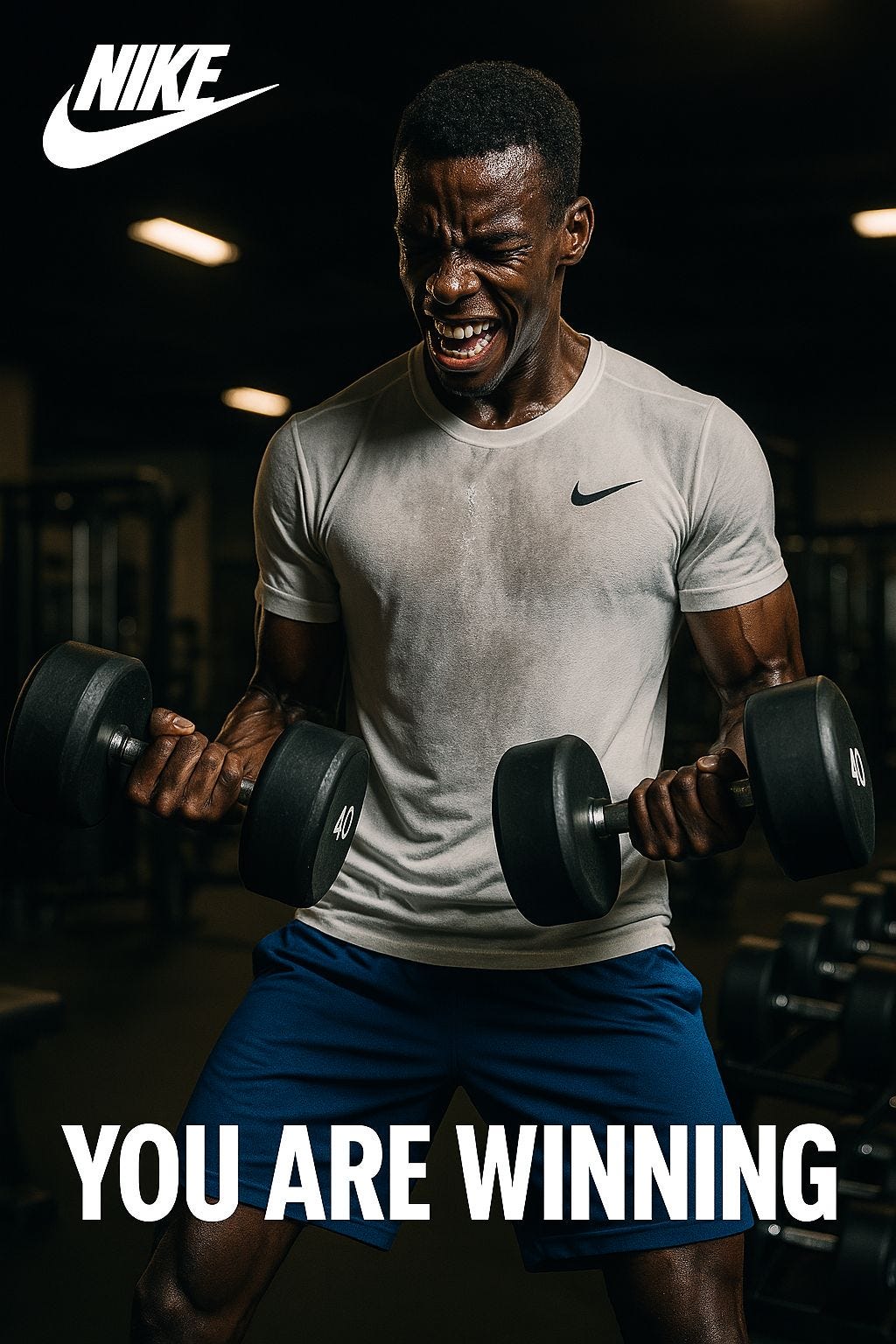
Now, if your first reaction is, “But it’s not the same guy,” you are right. He became even more heroic, and I would argue that the composition is even better than the original. You could put this creative on social media just as it is, with no editing required.
Sure, Photoshop might be safe for now. But is Canva? Just look at this:
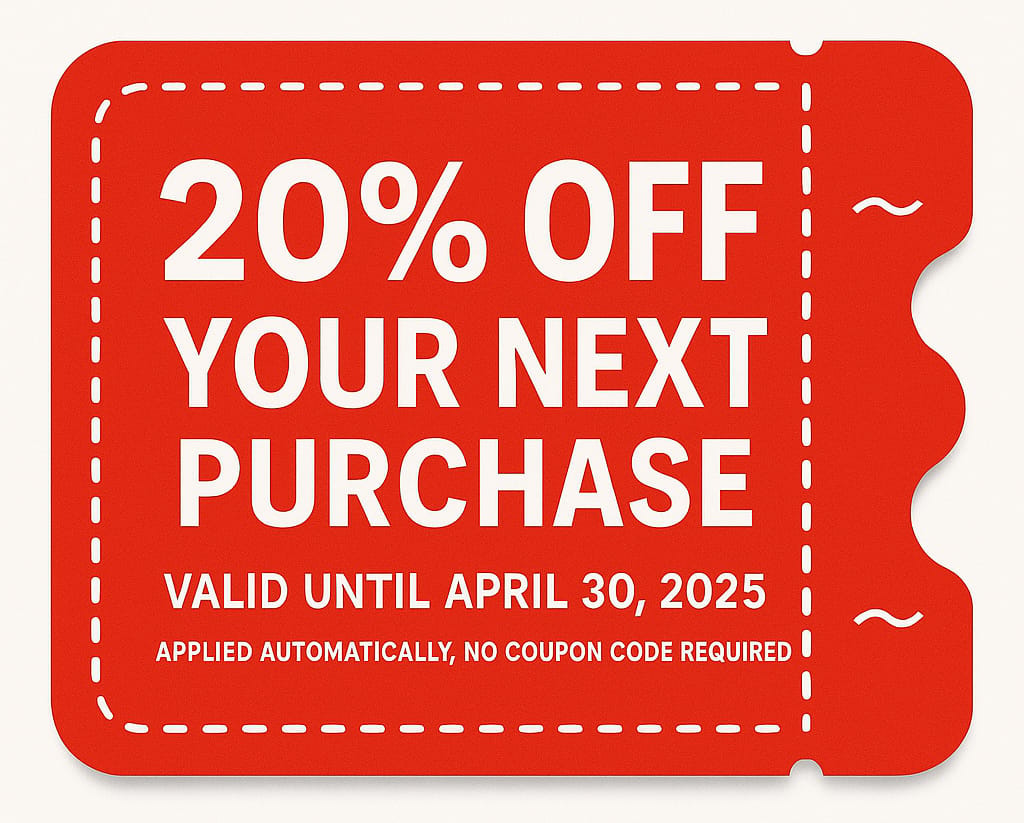
Please generate an image for me. It should be coupon I can upload to Facebook. The color of the coupon should be #F70006 as that is our brand color, and the text should be white. It should say with big letters: 20% OFF YOUR NEXT PURCHASE. In smaller text under it: Valid until April 30, 2025. Under it: Applied automatically, no coupon code required.The result is basic but usable. No image model could ever produce anything like this due to limitations with text rendering:

Now, let’s make it a bit fancier:
Make it more looking like a coupon, with a tear-off part and some squiggly linesNo, Canva is definitely not safe:
Let’s push the limits of creativity and ask ChatGPT to come up with a funny comic strip:
Generate a 4 image comic about AI trying to take people's jobs but constantly failing in a funny way.And the result:
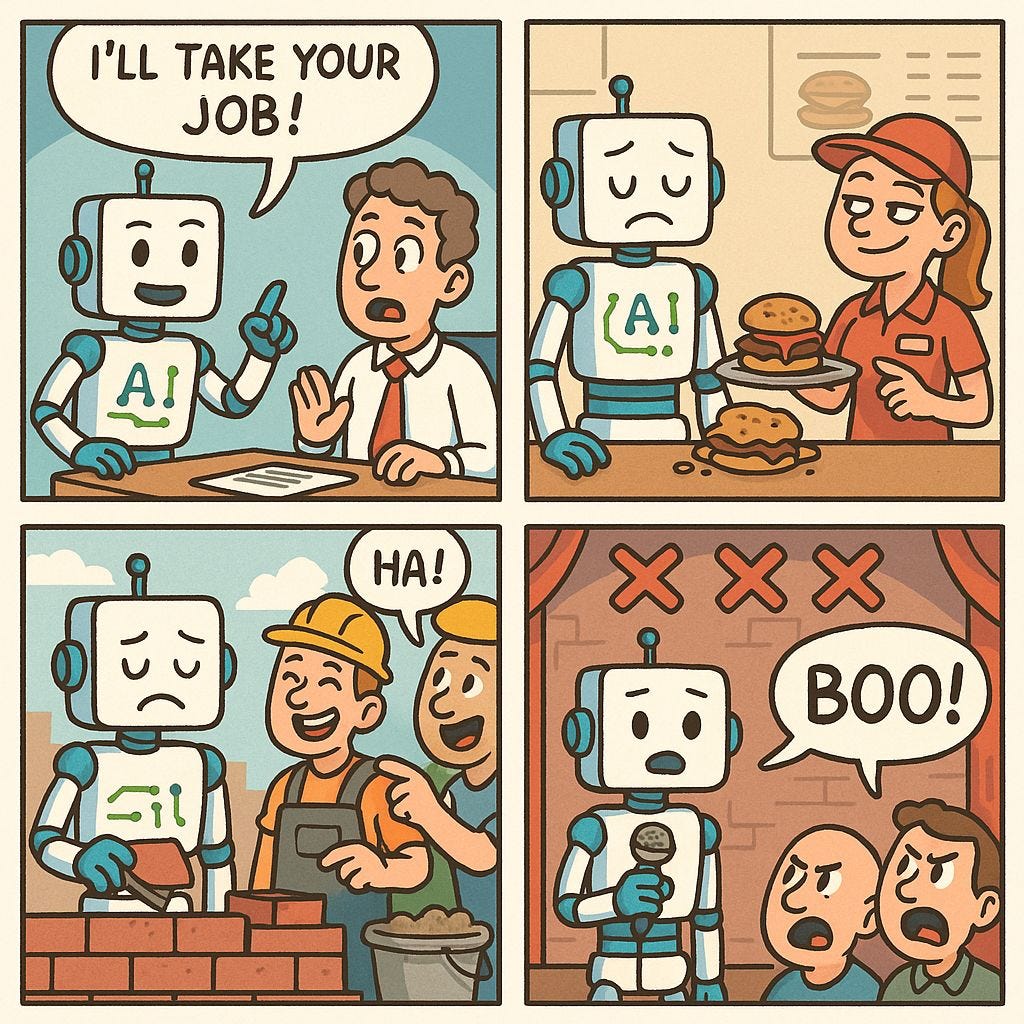
This is genuinely funny and perfectly executed, with the callout bubbles and text elements.
I am sure you’ve noticed that no marketer appears in this comic strip. Use this information as you wish.