

ChatGPT Images 2.0 is a Generational Leap
The one thing you need to know in AI today | AI-Ready CMO


Yesterday we called Claude Design incredible. OpenAI clearly took that personally.
They released ChatGPT Images 2.0, and the name does it no favors. “2.0” sounds like more of the same, but it isn’t. It’s an insane leap.
Take a look at the announcement page. OpenAI built the entire thing with the model: magazine spreads, newspaper layouts, cartoon panels, all with perfect typography and coherent visual logic. It’s the best product launch page I’ve seen this year, mostly because it proves the thing actually works under real design pressure:
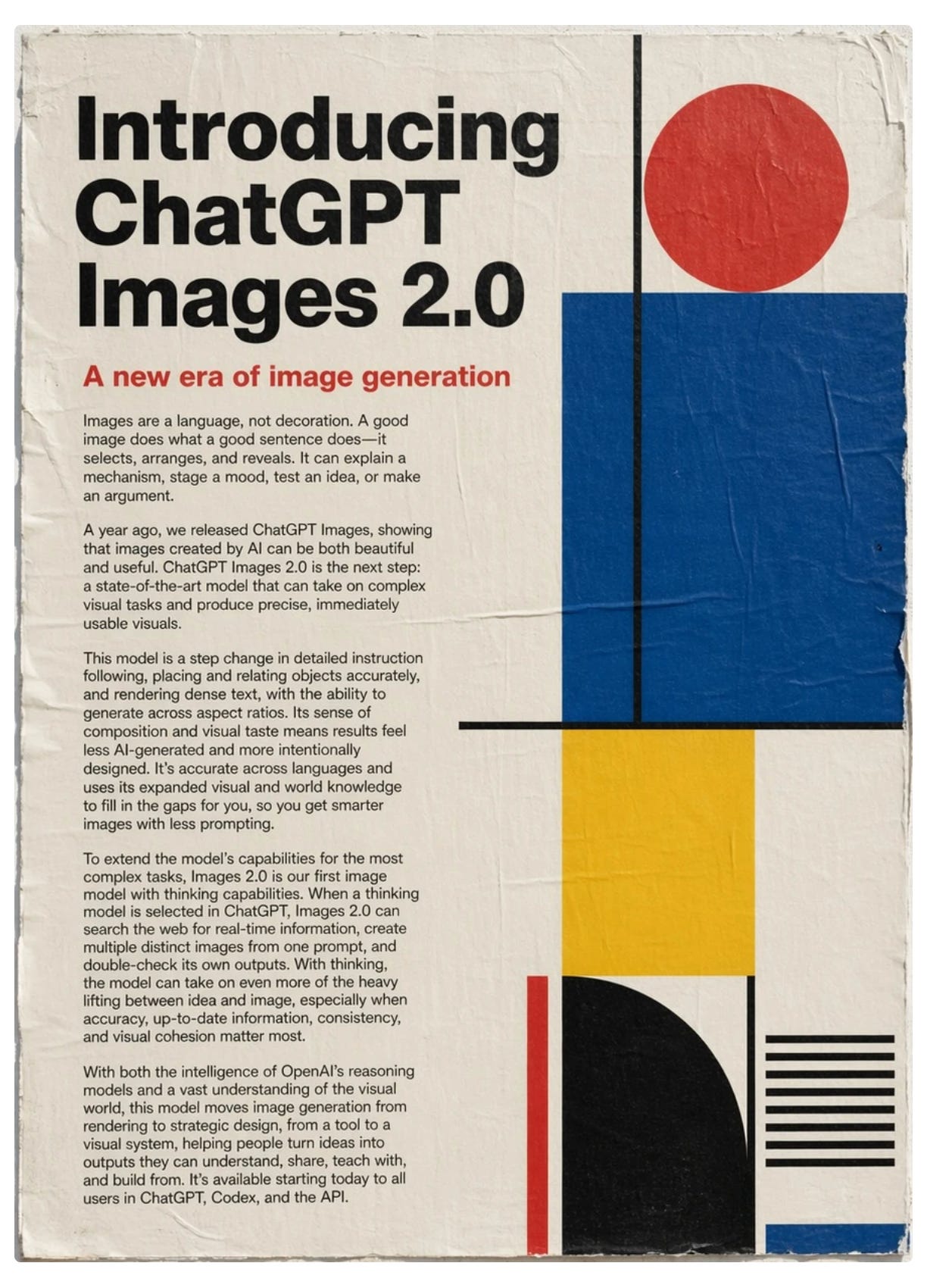
As you probably realized, the headline fix is text.
AI image generators got better at it but still, often treated words like decorative mold. Images 2.0 renders dense copy, UI elements, iconography, and small labels accurately. At up to 2K resolution, with aspect ratios from 3:1 banners to 1:3 posters.
Finally, the model understands that graphic design is information arranged with intent. Pictures are just the container.
But if you’re paying for Plus or Pro, it gets better.
For those paying, the model goes further than mapping prompt to pixels. It searches the web, reasons through layout structure, and can generate up to eight related images in one go. Character continuity across comic panels. Campaign variations in different sizes. OpenAI calls this moving from “rendering to strategic design.” Fancy, but it works.
You can generate a whole storyboard, a localized ad set in five languages, or a product explainer sequence without stitching together twenty separate prompts.
There are rough edges (obviously). Wired tested Chinese text rendering and found plenty of fake characters dressed up to look like meme-poster writing. The model admitted as much. Non-Latin script support has improved (Japanese, Korean, Hindi, Bengali, an others), but if you’re running global campaigns, you still need a native speaker reviewing the output.
So what do you actually do with this?