

ChatGPT Atlas: The Browser That Does Things
The one thing you need to know in AI today | AI Ready CMO


We’ve been using Perplexity’s Comet browser as our daily driver for months now, and it’s genuinely good at what it does. Need to research competitor positioning? Want to synthesize a dozen analyst reports into a brief? Comet excels at understanding and synthesizing information. It can automate tasks too—it’s not purely passive—but its agentic features feel like a useful add-on to what is fundamentally a research tool.
OpenAI’s new ChatGPT Atlas browser, which launched yesterday on macOS, inverts that priority structure.
Atlas is action-first by design. Where Comet’s primary question is “what do you want to know?” with automation available when needed, Atlas asks “what do you want done?” and provides knowledge as supporting context. It’s positioning itself as an action layer that sits between your intent and its completion, with search and synthesis in service of that goal. You tell it to order groceries for that recipe you’re viewing, and it opens Instacart, adds the items, and completes the purchase. You ask it to book a dinner reservation while you’re reading restaurant reviews, and it handles the entire transaction without you leaving the page.
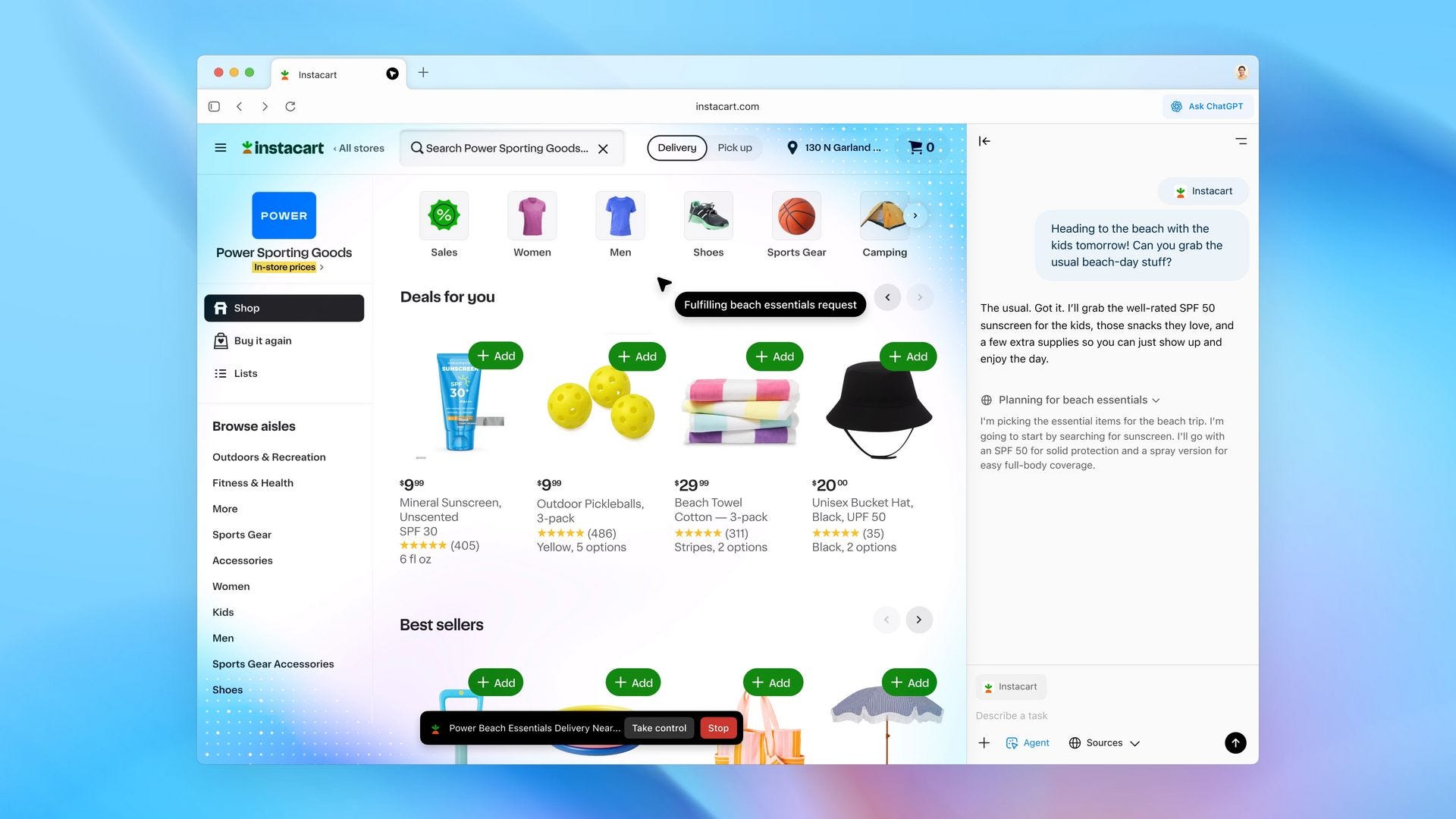
If you are working in e-commerce or customer experience, this should ring the alarm bells.

The browser has always been where intent happens—you research, compare, and eventually convert. But that process has historically been messy, requiring users to bounce between tabs, copy information, and manually complete forms. Atlas is betting that collapsing this friction is more valuable than helping you research better. Its Agent Mode doesn’t just understand context; it executes on it.
The immediate implications for marketers are obvious but worth stating: you need to be optimizing for agentic accessibility—can an AI acting on someone’s behalf complete a transaction with you seamlessly?
If your checkout flow is clunky, if your site doesn’t play nice with automated agents, you might as well not exist. And unlike traditional SEO where you could at least monitor rankings, here the entire interaction happens behind the scenes until the transaction completes.
The harder question is whether people actually want their browser to do things versus just know things.
There’s something unsettling about delegating purchasing decisions to an AI, even when you’ve given explicit instructions. OpenAI is betting that convenience wins, and they’re probably right—but the adoption curve will tell us whether that win is a landslide or a long, slow climb.
3 AI Marketing Tools To Try Today
Chatbase
Train custom chatbots on your company knowledge—Chatbase turns your docs, FAQs, and data into AI assistants that answer customer questions instantly.
Frase
Research and write SEO content that ranks faster—Frase analyzes competitors, generates outlines, and optimizes every paragraph for search visibility.
Reply
Automate your entire outbound sales sequence—Reply.io handles cold emails, follow-ups, and multi-channel outreach so you focus on closing, not chasing.