

ChatGPT Ads Just Hit $100M. In Six Weeks.
The one thing you need to know in AI today | AI-Ready CMO


OpenAI’s U.S. advertising pilot inside ChatGPT has crossed $100 million in annualized revenue roughly six weeks after launch. That run rate was built on partial inventory — fewer than 20% of eligible users even see ads on any given day. The demand showed up before the platform was ready for it. A fifth of the ad revenue of the New York Times in 1.5 months is a big deal.
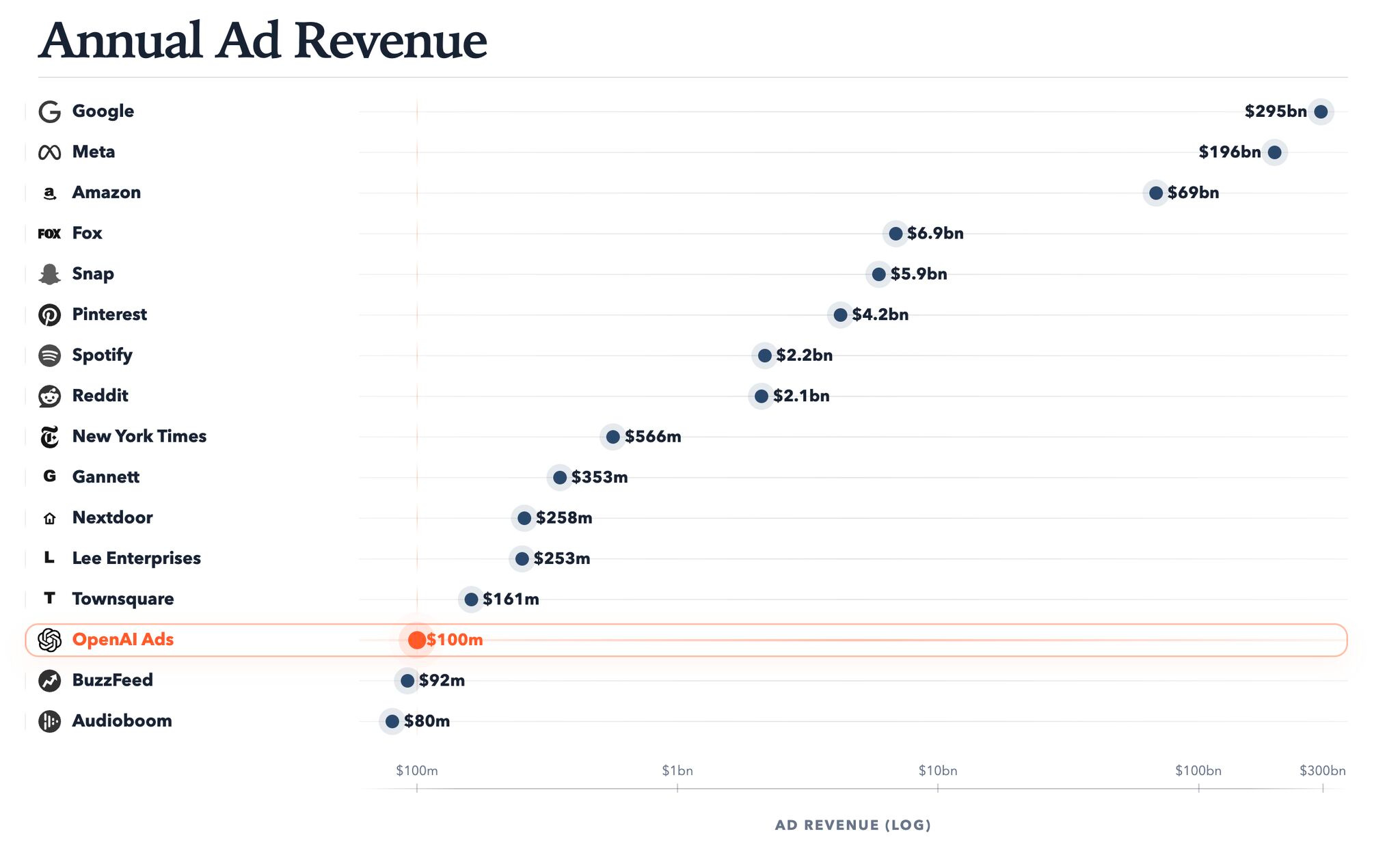
The ads appear below ChatGPT’s responses, clearly labeled, separate from the answer. OpenAI says they don’t influence outputs, and advertisers don’t get access to conversations. Over 600 advertisers are already in, with strong SMB interest. For a pilot this young, with this little distribution, that level of traction is hard to wave away.
Self-serve access opens in less than a month.
That’s when ChatGPT ads stop being a managed experiment for a select few and become a channel anyone can test. Agencies will build offerings around it, benchmarks will start forming, and the learning curve steepens for everyone who waited. We’ve seen this before with early Google Ads, early Facebook, early retail media. The teams that showed up first didn’t always spend the most — they just learned the fastest.
The inventory is interesting because of the intent behind it. People don’t scroll ChatGPT the way they scroll Instagram. They ask it to compare software, plan trips, evaluate vendors, troubleshoot problems.
That’s research-stage, high-consideration behavior, the kind of moment where a relevant ad can actually be useful. For B2B marketers especially, worth watching closely.
Nobody has published official CPM numbers yet, but the math is suggestive. Meta averages roughly $7–17 per thousand impressions depending on the vertical. Google search ads run $10–50+ for high-intent queries. ChatGPT is hitting $100M annualized from a small fraction of its U.S. user base with limited daily ad exposure — which implies an effective CPM at or above Meta’s upper range. Advertisers are clearly paying a premium for context-aware placement inside a conversational interface. Whether that premium holds as inventory scales is the open question.
Nobody should rush budget in blindly. Measurement is immature, attribution is thin, the creative playbook doesn’t exist yet. But if your products win when customers are comparing and asking follow-up questions before they buy, this channel is built for that. Map your high-intent query themes now, tighten your analytics, and decide what a successful test looks like before self-serve goes live. The worst position to be in is curious but unprepared.
— Torsten and Peter
Share with a colleague. Earn paid membership months.
3 AI Marketing Tools To Try Today
BotPenguin
BotPenguin is an AI chatbot platform supporting live chat, lead generation, and customer support across web, WhatsApp, and social channels. Use it as an affordable entry point for adding conversational marketing and automated lead capture to your stack.
Granola
Granola uses AI to transcribe meetings in real time and deliver structured summaries with action items, decisions, and key takeaways automatically. Use it for clean, focused meeting intelligence without the feature bloat of enterprise tools.
Lindy
Lindy is an AI executive assistant that triages emails, schedules meetings, updates CRMs, and joins calls on your behalf. Use it to reclaim hours from admin work and refocus on strategy and high-impact marketing activities.
Paid members, your toolkit and this month’s report are below.