

AI Made Us Faster. And Also Overworked.
The one thing you need to know in AI today | AI-Ready CMO


Here’s something I wasn’t expecting to say: AI is making my team more productive and more overworked at the same time. Not because the tools don’t work—they work great. That’s exactly the problem.
A new study from UC Berkeley, published in the Harvard Business Review, just put eight months of research behind something I’ve been feeling for a while. Researchers followed 200 employees at a US tech company and came to conclusions that may sound strange at first.
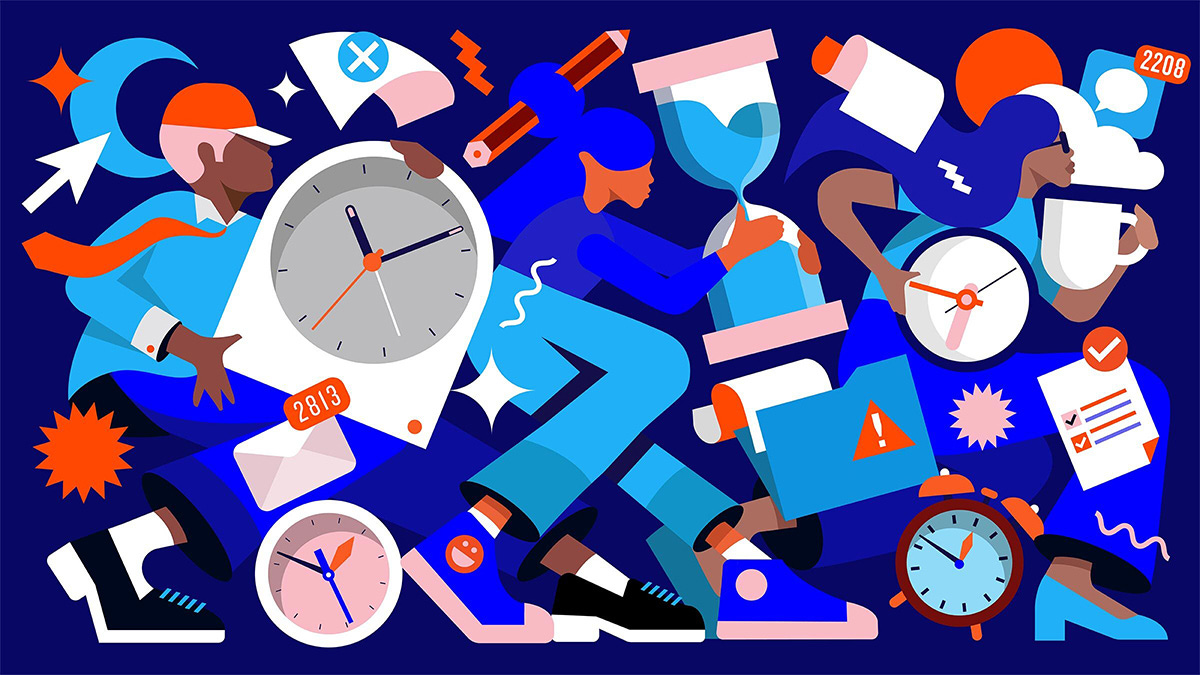
AI tools didn’t reduce anyone’s workload. They intensified it. Workers took on broader tasks, worked at a faster pace, and extended their hours—all voluntarily. Nobody was mandated to use AI. They just… did more, because AI made “doing more” feel possible.
Product managers started writing code. Researchers took on engineering tasks. People prompted AI during lunch, in meetings, right before leaving their desks. The boundaries between work and not-work became much easier to cross.
This tracks with everything we’re experiencing.
We now run video ad campaigns that would have been impossible with our team size a year ago. We localize to a degree that was unthinkable six months back. We’ve built internal measurement tools that are saving us real money, but that we never could have built without AI. Every one of those capabilities is a win. Every one of them also means more coordination, more multitasking, and more venturing into territory where our existing skill sets feel uncomfortably thin. And the blurred boundary between work and personal time is real. Sending “one quick prompt” before bed is the new checking your email at dinner.
It is a self-reinforcing cycle: AI accelerates tasks, which raises expectations for speed, which makes workers more reliant on AI, which widens the scope of what they attempt, which creates more work. And the short-term productivity surge eventually gives way to cognitive fatigue and burnout. The cruel irony is that because the extra work is voluntary and feels like fun experimentation, leaders don’t notice the load building until the damage is done.
Their recommended fix is intentional pauses and protected time for human connection—sensible, but not sure that is how the real world works.
The harder truth is organizational.
If you’re a marketing leader watching your team accomplish things that were previously out of reach, it’s tempting to just enjoy the ride. But the right move is to ask whether the expanded scope is intentional or just the path of least resistance. Are you choosing to do more, or has AI quietly decided for you? Capability expansion must be a strategic decision, not an accident. Build in the discipline to say, “We could do this, but should we?”
— Torsten and Peter
3 AI Marketing Tools To Try Today
n8n
Unlock seamless workflow automation for your marketing team—n8n connects all your tools and streamlines processes effortlessly.
SetApp
240+ Mac apps, including AI-powered writing, design, and productivity tools, for one flat $9.99/month fee—no juggling subscriptions.
Prezi
Create spatial presentations that don’t look like PowerPoint—AI helps structure narratives and generate talking points automatically.
Stop Writing Prompts From Scratch.
You know what you need AI to do. But crafting prompts that actually deliver takes trial and error—testing syntax, refining context, iterating until outputs stop being generic.
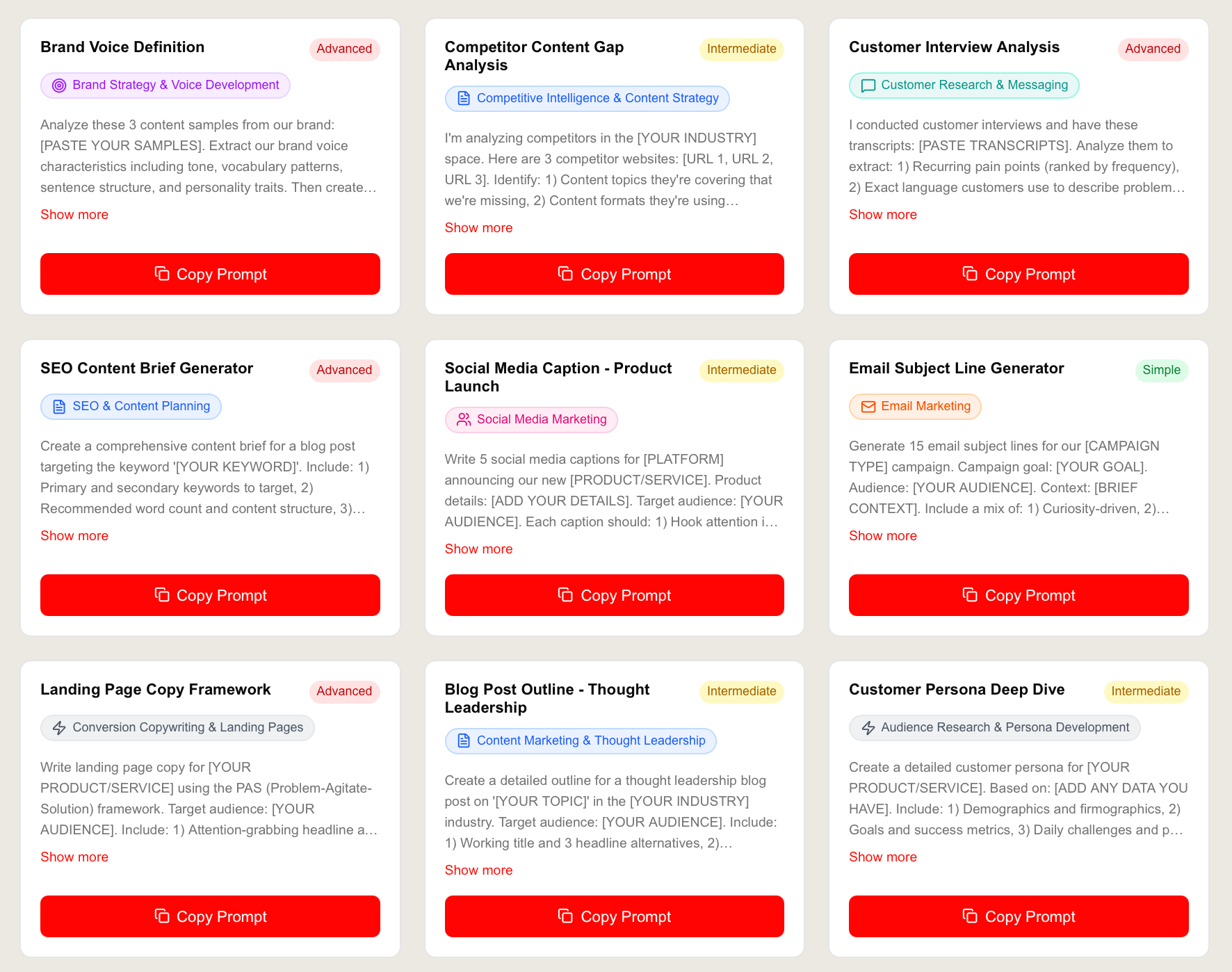
The Prompt Library gives you 110+ battle-tested prompts built specifically for marketing workflows. Search by use case, category, or complexity level. Copy the prompt. Replace the bracketed placeholders with your specifics. Get strategic outputs on the first try—brand voice analysis, competitive intelligence, customer research, SEO briefs, social campaigns.
No more prompt archaeology. No more generic outputs. Just proven templates that work.
Available for AI Ready CMO Pro subscribers.