



The past week has seen an explosion of new AI “agents” – autonomous AI tools and platforms designed to take on complex tasks with minimal human guidance. Unlike traditional single-purpose chatbots, these AI agents can act with a degree of autonomy, chaining together reasoning steps and even invoking other tools to get jobs done.
This trend matters for marketing, sales, and customer success teams because it promises 24/7 team members who can handle everything from qualifying leads to drafting campaign content without constant hand-holding. In short, AI agents are emerging as tireless colleagues who could dramatically boost productivity and responsiveness.
Behind the frenzy is a convergence of factors: breakthroughs in AI model capabilities, big tech investments, and competitive pressure across continents. In just days, multiple high-profile agent platforms launched or hit milestones, each vying to automate more of the knowledge work pipeline.
The takeaway is clear – the AI agent era has arrived. Those in marketing, sales, and creative fields should pay attention because these tools are quickly moving from hype to practical application, streamlining workflows and unlocking new strategies for engagement. Below, we break down the key developments driving this Agent Fever and what they mean for your business.
The Manus Madness
One of the most buzzed-about launches was Manus AI, a new autonomous agent from China that generated enormous hype on social media. Officially launched on March 5, Manus is billed as the world’s first fully autonomous general-purpose AI agent—essentially an AI “intern” that never sleeps.
Early access has been so coveted that invite codes for its beta were resold for over 100,000 yuan (≈$14,000) amid a waitlist topping one million users. This frenzy underscores the surging demand for AI agents that can handle real work. Manus’s creators describe it as combining “mind and hand,” blending cognitive intelligence with action-taking abilities. In demos, it has surprised observers by completing tasks in seconds that typically require days of human effort.
What can Manus do?
Quite a lot. It boasts autonomous task execution across various activities: writing reports, analyzing data, generating content, and planning travel itineraries. It’s a multimodal agent, meaning it handles text, images, and even code, and can plug into external tools like web browsers or spreadsheets to get information.
For example, Manus can plan a detailed trip abroad, find you a new home overseas, or crunch financial statements with minimal prompts. It continuously learns and adapts to user preferences over time, aiming to become more personalized and efficient with use. In benchmark tests, Manus reportedly outperformed some leading AI models in solving real-world problems, hinting at its advanced reasoning skills.
Why it matters for marketers
Manus positions itself as a versatile digital worker who can handle routine or research-heavy tasks. Imagine having a virtual marketing assistant that can draft campaign reports, pull industry stats, or even do sales scouting (see a demo here).
Early use cases span industries, from automating data analysis (e.g., parsing sales reports) to content creation (e.g., building a quick promotional webpage or comparing product pricing).
For marketing teams, an agent like Manus could offload grunt work such as compiling analytics dashboards or creating multiple ad variants, freeing humans to focus on strategy and creativity. Sales and customer success teams might leverage it to automatically summarize CRM data, screen inbound resumes or leads, and handle first drafts of client outreach.
While Manus is currently in limited beta, its instant popularity signals that businesses are eager for AI that “thinks and acts” in tandem, not just chats. As more companies experiment with Manus, we’ll see whether an AI agent truly can function as an “employee” that reliably delivers – but the initial excitement indicates high expectations for productivity gains.
The path is obvious: it is a matter of time before competent AI bots (agents as we call them now) fully replace parts of the human workforce while also augmenting entire workflows, giving workers a significant productivity boost. AI will not just be part of teams but will become team members.
OpenAI’s Answer
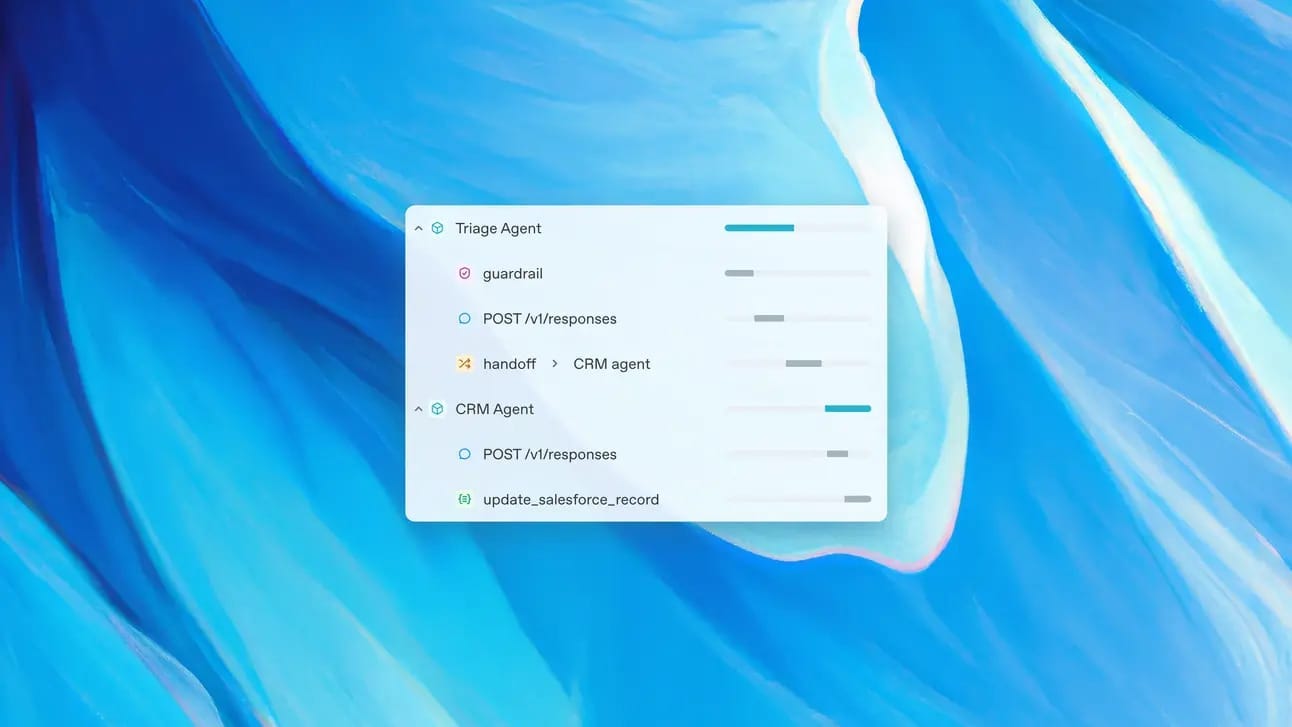
Not to be outdone, OpenAI rolled out new tools this week aimed squarely at empowering AI agents on its platform. These releases mark a pivot for OpenAI, from providing AI models to enabling automation and action.
Compared to Manus, OpenAI’s approach seems more modular and enterprise-focused. Rather than a single monolithic AI assistant, OpenAI is providing building blocks so organizations can create custom agents tailored to their needs.
For example, a sales team could use the new toolkit to build an agent that automatically scans incoming emails, identifies high-priority customer inquiries, and drafts suggested responses for reps. Another agent might continuously research market news and update an internal report. Previously, stitching together web search or file access with an AI model required custom coding; now OpenAI’s API can handle those actions natively. This lowers the technical barrier for companies to experiment with AI-driven automation in their workflows.
Not quite ready yet, but watch this space
For marketing and customer-facing professionals, OpenAI’s expanded toolkit is promising. We’ll soon see more specialized AI assistants embedded in everyday software. Think of marketing tools that generate content ideas, auto-publish posts at optimal times, and analyze the results—all coordinated by an AI agent behind the scenes. Or a customer success dashboard with an integrated GPT-based agent that proactively pulls up relevant knowledge base articles and drafts follow-ups after a client call.
OpenAI enables a new wave of AI automation beyond one-off chat interactions by baking agent capabilities into its platform. The practical upshot: expect your existing software and SaaS vendors to start offering “smarter” features powered by these agents. As this technology matures, professionals should be ready to collaborate with AI helpers who can take on complex tasks, not just answer questions.